Thursday, September 14, 2006

Bearing Witness

Somehow the wrong URL went in to Grand Rounds this week and my post on air pollution appeared for a second time. Probably my mistake. I thought I was submitting the post on Mulu Caving and MCQs,which also fit with the theme of higher education. I was, in fact, hoping to keep a low profile about air quality in Sarawak.

The day after the original post, friends advised me that a couple of years ago someone working in the travel industry in Borneo who had mentioned that people might want to delay travel for a couple of days because of the haze at the time, came to work the next day and found he had been fired. There has been some easing up around the issue, but as I was a guest in the country, I certainly didn't want to upset anyone. My blog was more about how important numbers are in resolution of health issues and being grateful there were now numbers.

Then before I left Borneo, I got a call that my boss wanted to see me. Oh, I thought, he saw the blog.

My colleague, Aye, who has yet to view my blog, said, "Don't be silly, nobody is reading your blog."
I had to admit that she was, for all practical purposes right, after all, I am the one who checks the sitemeter.

But then a week or two later I discovered about links and was astounded to learn I had 44 of them. If you haven't noticed, I have only a few sites on my blogroll. It scares me to even think about going into my template to create links. This means I haven't really got into linking yet. So how had I managed to acquire so many links? When I checked to see who had linked to my blog, I noticed about thirty newspapers in Malaysia, India, Nepal, China, from all over South East Asia as well as airlines, banks, the military and automobile makers in Malaysia. And all these links dated to the time of my blog about air quality.

I used to think I had to debate, argue and convince people about health issues. I am more and more moving into a position of simply noticing and commenting, what the Quakers call, bearing witness. Blogs are good for this purpose. When everyone else is blissfully ignoring something, it can be useful just to state the fact. My blog about air quality acknowledges a situation and that for the time being is enough.

When I saw my boss, he wanted to thank me and ask me back next year and he was OK with the fact that my final report might be delayed. No mention was made about air quality.

Labels:

Tuesday, September 05, 2006

Caving in Gunung Mulu National Park

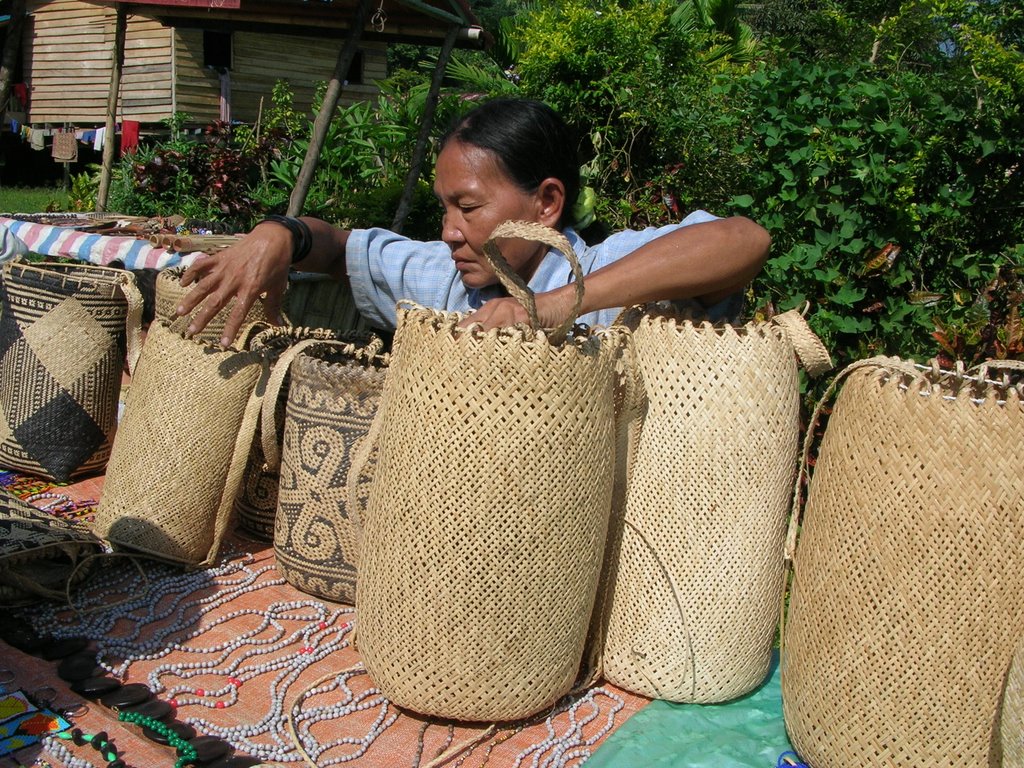
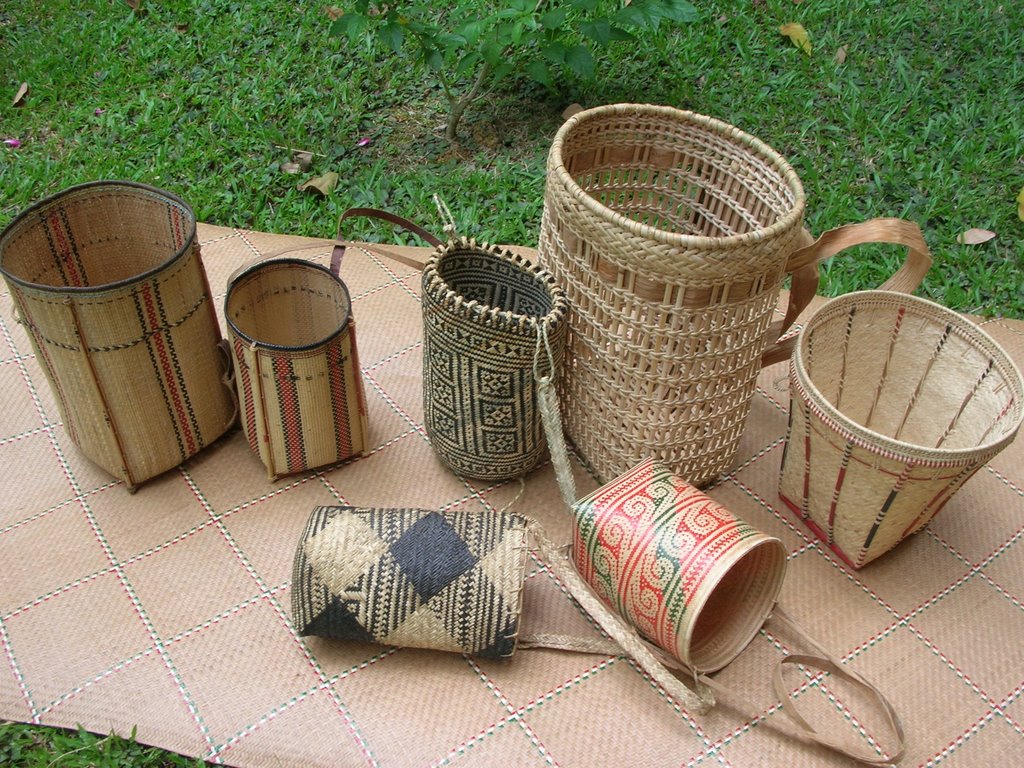
We are going caving in Sarawak for the weekend. A package deal of 2 nights and 3 days will only cost $250 each. A direct flight takes us to Miri where a smaller plane drops us off in Mulu. Miri is a coastal city remote from the capital nestled up against Brunei. Once we reach Mulu, it dawns on me that the people in these more rural places will be more traditional. Indeed they are, with women on the streets and paths carrying traditional rattan baskets suspended by tump lines. Even people riding motorbikes are likely to carry a traditional baskets and wear a conical straw hat.

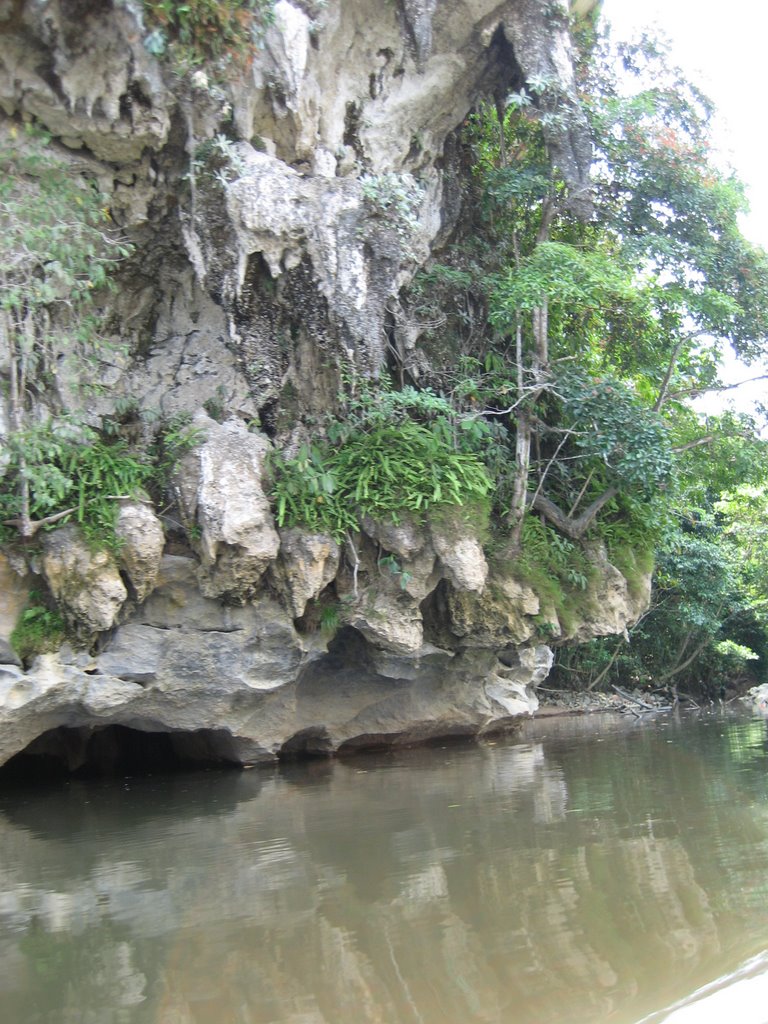
The fancy Royal Mulu Lodge is right in the Gunung Mulu National Park about ten minutes from the airport in Mulu. Gunung Mulu is a World Heritage Area which encompasses a series of accessible caves including Deer Cave, the largest in the world. In some of the caves in the region, people still harvest swiftlet nests high inside the caves for the tasty but expensive Bird’s Nest soup. Long lengths of bamboo ladders are positioned to extract the nests in a sustainable way. Bird’s nests have been a top foreign export of Sarawak for centuries. Unfortunately for us those caves are not open to tourists. We are greeted by our guide at the airport and taken by van to the Lodge. Waiting for us at the hotel which is laid out like a giant longhouse, are fresh chilled mango juice and a complimentary face wipe. This is the life!

At 2 pm the first day we head off to the first two caves. Dense vegetation clings to every surface on the two hour walk through the rain forest to Langs Cave and Deer Cave. We move on a wooden path a couple of feet off the ground. We are warned not to touch the side rails as there are many insects that sting. The guide is an young Kenyah woman with reasonable English. Travelling in the afternoon is not the best time to see animals or birds which are all sheltering from the heat but we find many fascinating insects and butterflies. A caterpillar that looks like it has a fur coat with the guard hairs still attached. A stick insect is so much like a stick that I truly do not see for the longest time although I am looking right at it. As we move closer to the caves, a round bug with red circular stripes appears more frequently on the sides of trees.

An ancient river bed scalloped the walls and floor of Deer Cave while ongoing work by the elements on the limestone creates stalagmites and stalagtites. Along the ceiling there are rippling folds of rock and round protuberances as well as the thin etched creations connecting the top and bottom of the cave throughout. In one section of the cave, guano lies several feet deep below the boardwalk. The smell of ammonia is so strong we cover our noses with handkerchiefs or hats as we pass over it. Thousands of bats live high in the roof of the caves.
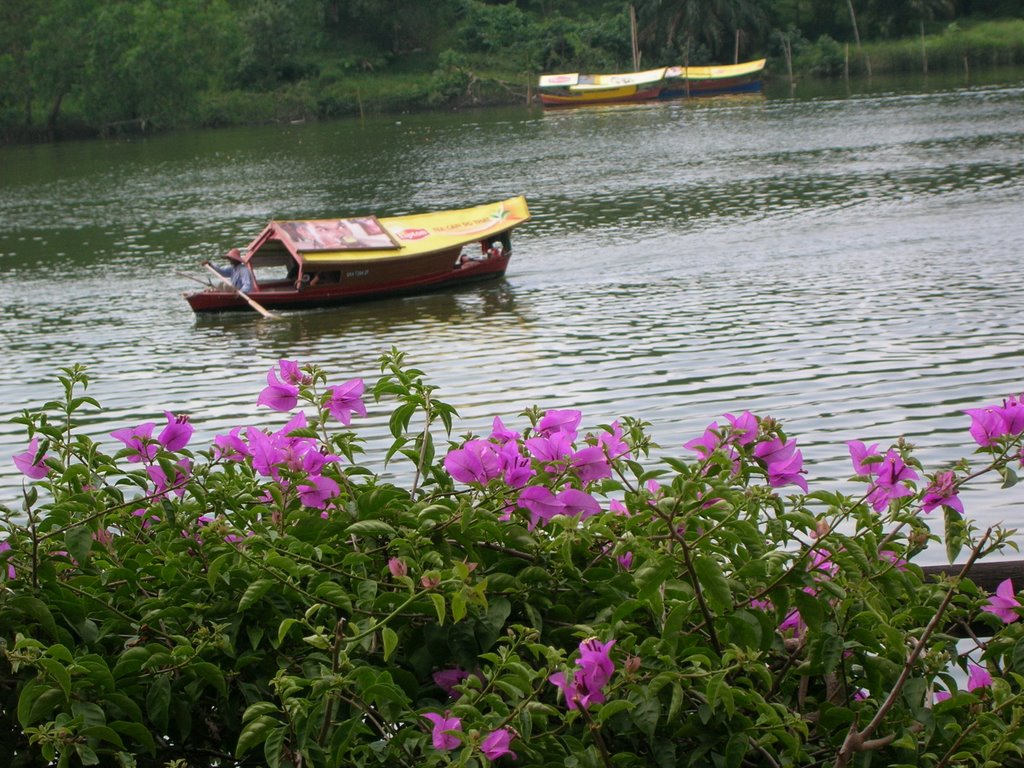

The complex cave passages wind their way through the limestone mountains into chambers which are so large they astound. Stairs take us close to the top of one section in the largest natural rock chamber in the world where we can view the soft bodies of bats clinging to the walls. We come across a number of workers and researchers in the depths of the cave and spot snakes lurking in the formations at several spots. There is one rock formation that looks surprisingly like the profile of Abe Lincoln and others that resemble animals.

Langs Cave is just next to Deer Cave about 100 m. away. We stop for cold drinks at the Bat Observatory just outside the caves before we head back. At 5 pm most evening there is a spectacular bat migration. Today it starts to rain lightly at 4pm. Others in the group opt to wait to see if the rain stops so they can see the bat migration but we head back. I have tried to explain bat migration to friends, without success, how bats blanket the sky with a eerie chittering just a short interval before dusk and after dawn. It seems as if there is nothing else except them for a short period and then as if they were never there at all. It is one of the things you have to experience yourself. A Dutch group with us have come specially to see the bat migration so make arrangements to return the next day.
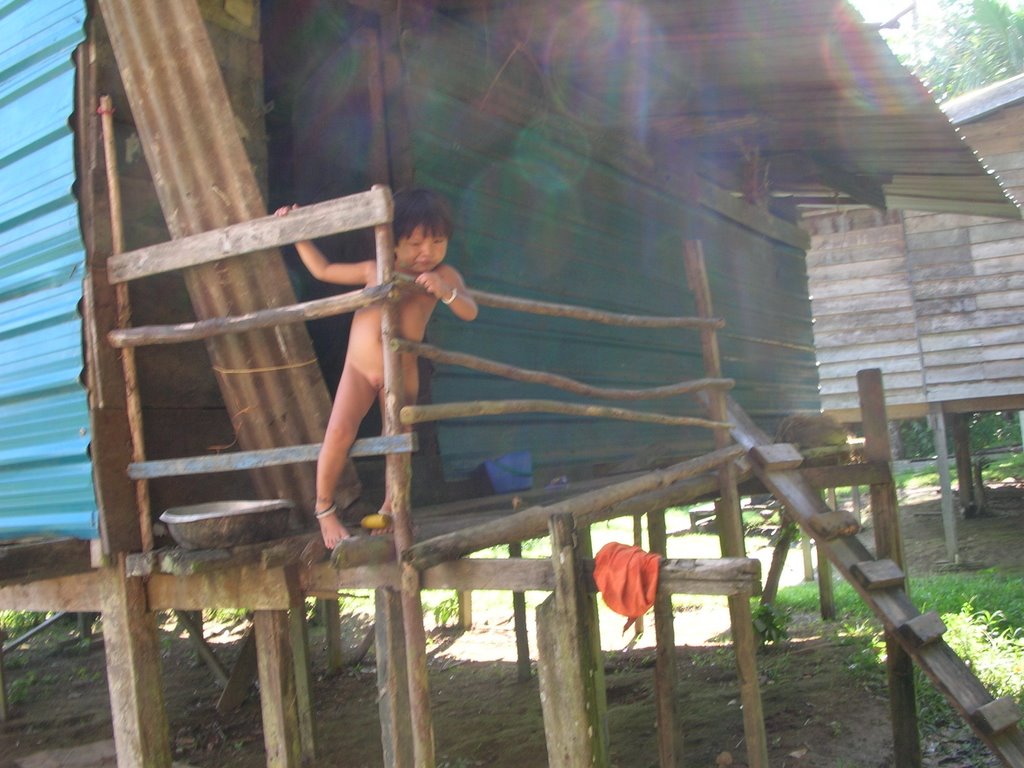
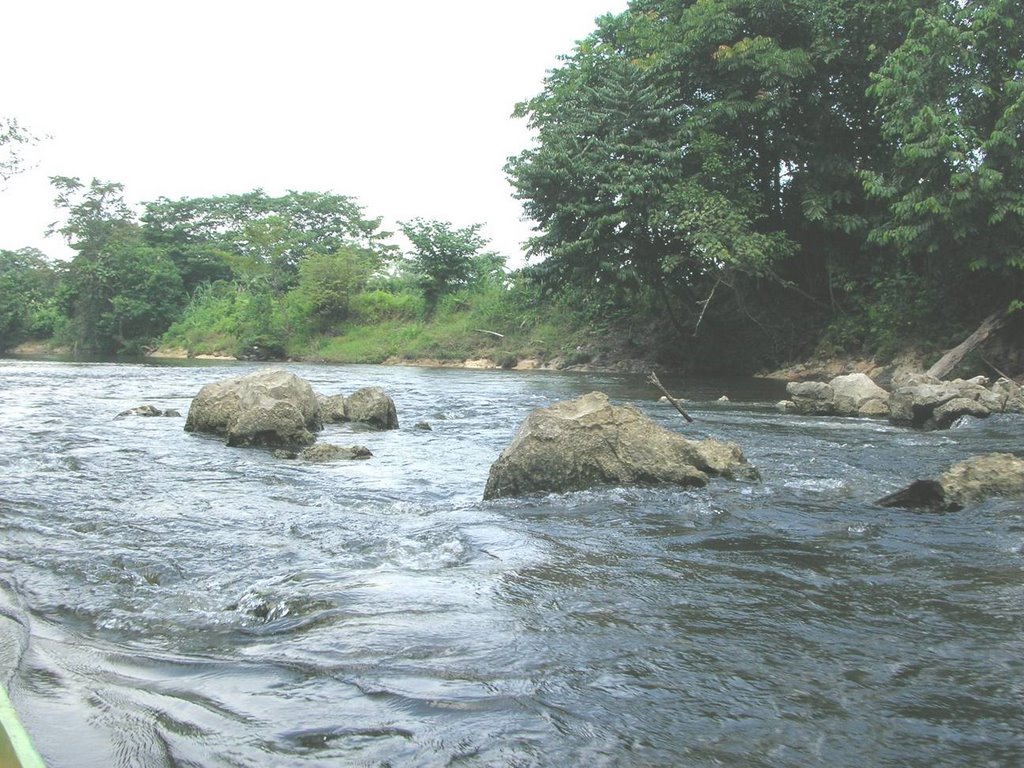
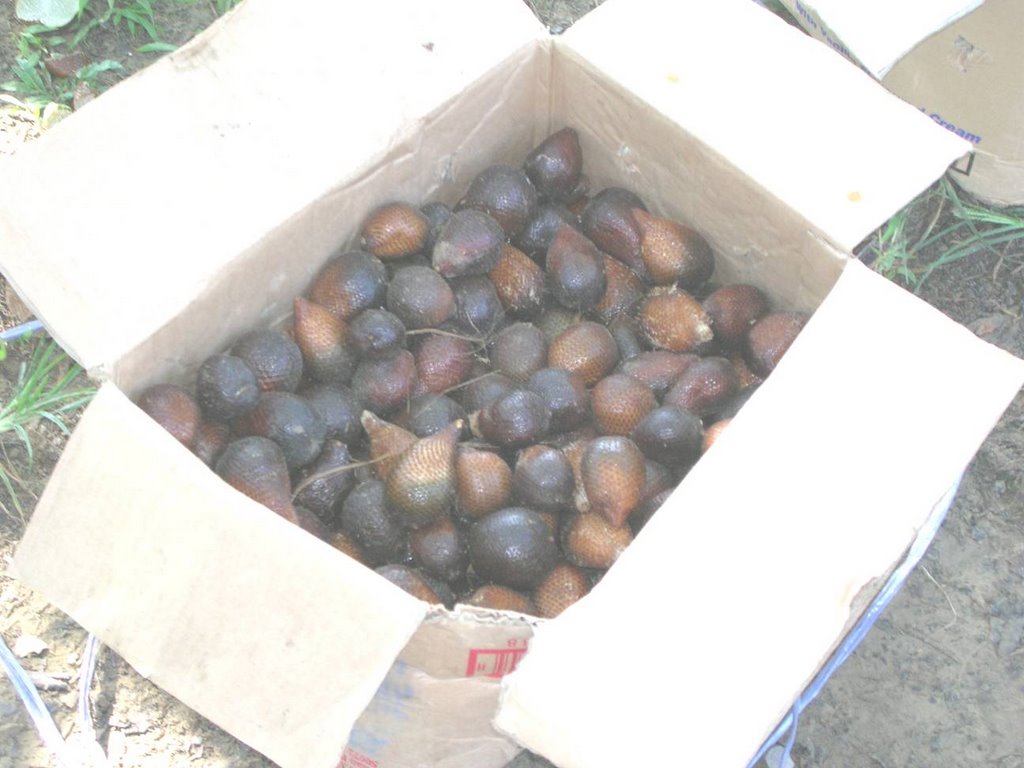
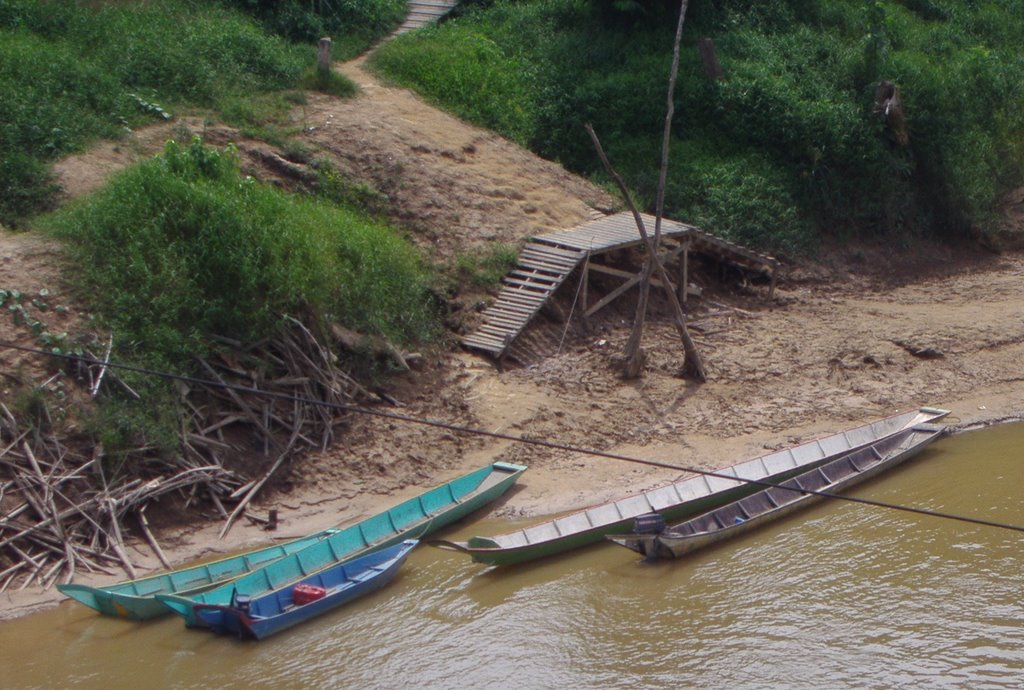
We are happy and muddy when we get back to the air conditioned comfort of our room. The next day we are taken by longboat up the river to Clearwater Cave and the Cave of Winds. We make a short stop at one of the only settlements of Penan. Longboats are tied up at the river edge. The community has set up stalls for handicrafts where we are able to purchase the beautiful black and tan rattan bags of exquisite design, patterned mats as well as jungle produce such as snake fruit and bamboo shoots. Older women with extended earlobe loops sell baskets. The homes are unpainted wood shacks, people are bathing in the river and lines of clothing are strung out in the sun to dry, a testament to the industry of the women. A satellite dish sticks out of the edge of one shack. A small naked girl idly watches me from her porch. Like many of such dislocations of normadic people, it doesn’t look like a very successful experiment.
We stop briefly at the National Park Center for our lunch. There are groups of pitcher plants and orchids of many varieties on display. We decide after a quick look at the water in Clearwater Cave not to swim in it. There are also arduous hikes in the area including the overnight hikes to the limestone Pinnacles and the Mulu Canopy Skywalk we don’t take.

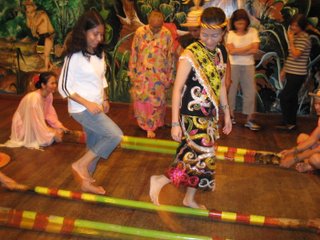
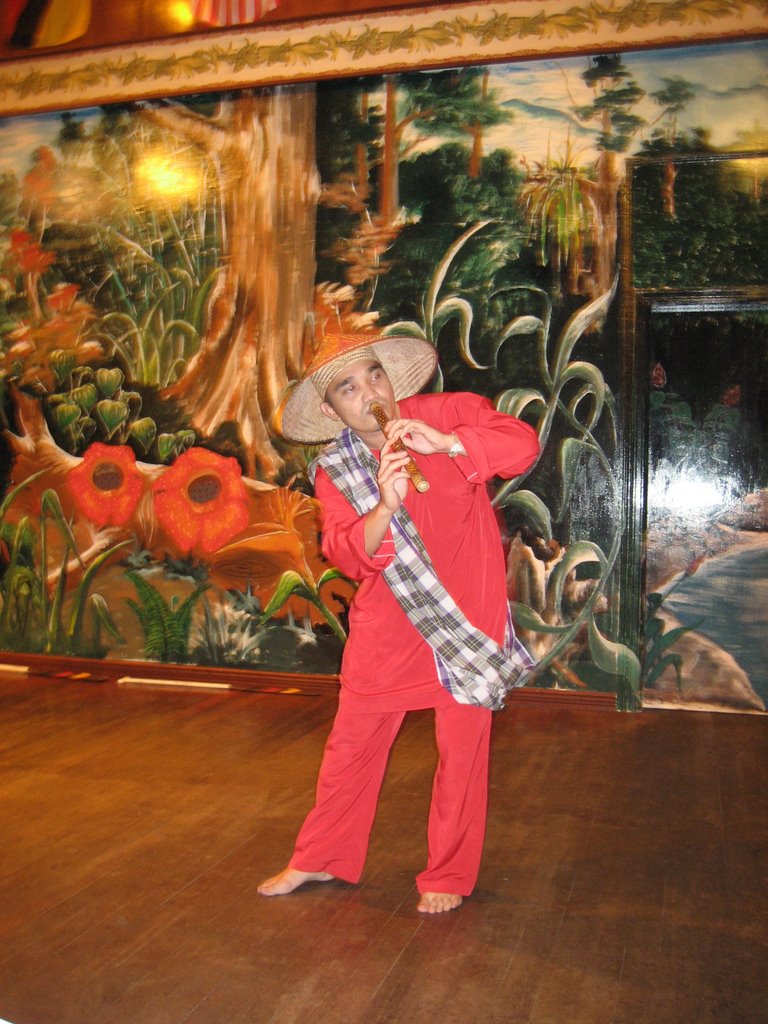
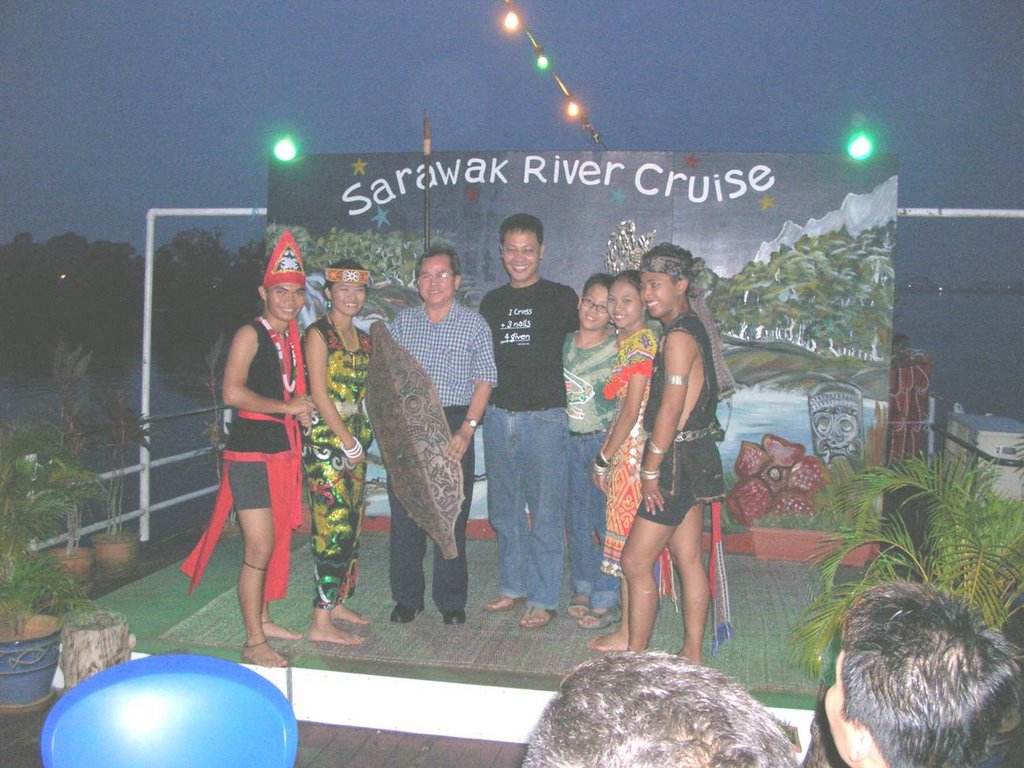
At night we are treated to the best cultural display we have seen in Sarawak. It includes various cultural dances, blow pipe display, bamboo pole dancing and even someone twirling on a pole balanced on his stomach high above the crowd. The costumes are exquisite, the choreography excellent and the exuberance of the staff, who also serve us our dinner, is grand.

We have a couple of hours in Miri waiting for our plane connection so we hire a taxi to take us into the town. This proves to be an inspired decision as our driver goes out of his way to show us around his home town. A local park has reproduced a version of the canopy walk for which the region is famous and the handicraft stores are packed with local articles. We are tired but satisfied when we reach home.

As my time in Sarawak comes to a close, the multiple choice questions (MCQs) I have put off writing threaten to overwhelm. Sets of new MCQs are needed every year. In a country where English is a second, third or fourth language, MCQs are not the best way to measure competency or appreciation. Supposedly MCQs capture recognition, although I find I am doubting this too. MCQs are popular largely because they are easy to mark and for students, no composition or grammar are needed.


They aren’t easy to write. They rely in large part on language facility and tricks in wording. In best answer questions, several answers will be right but only one is the best possible answer. We have just completed the orals for the end of the community medicine rotation in fourth year. It has been an exercise about the crucial importance of simple phrasing and clear language without which the students don’t even understand the question. l am attempting to write simple, clear MCQs with varying results. I am getting more and more agitated as I try to match my original objectives up with questions that focus almost entirely on knowledge of facts. My colleagues, who have exactly the same kind of problem, make soothing gentle reassurances many of which end in lah. The lah is also extended to the English translation.

“It’s OK, lah. Don’t worry, lah.”

”Lah-ing” is a wonderful softening device if ever there was one, so Malaysian. Malaysians are a gentle, kind people. Even when you are annoyed with them, you are deflected by their innate kindness. Proverbs often extract the essence of cultures.

One can pay back the loan of gold but one is forever in debt to those who are kind.
Malay Proverb

Our MPH students come over for a Burmese Laksa lunch which is similar to but not the same as Penang Laksa. The Burmese require the thick shrimp and fish sauce to have exactly the right amount of lemon grass, so much tasting goes into getting it just right. The fish-shrimp sauce is ladled over different types of noodles with hard-boiled eggs, fried garlic, deep fried dahl paste, a dollop of hot pepper, chopped cucumbers and coriander on the side and lime juice squeezed on top.

It is also durian time so we are treated to Indonesian durian, not quite so good as Sarawak durian as I am told repeatedly. Three large spiked fruits are cracked open on the table and we help ourselves to the fleshy, succulent fruit. A treat someone’s father has brought back from his trip to locate enough durian to pickle.

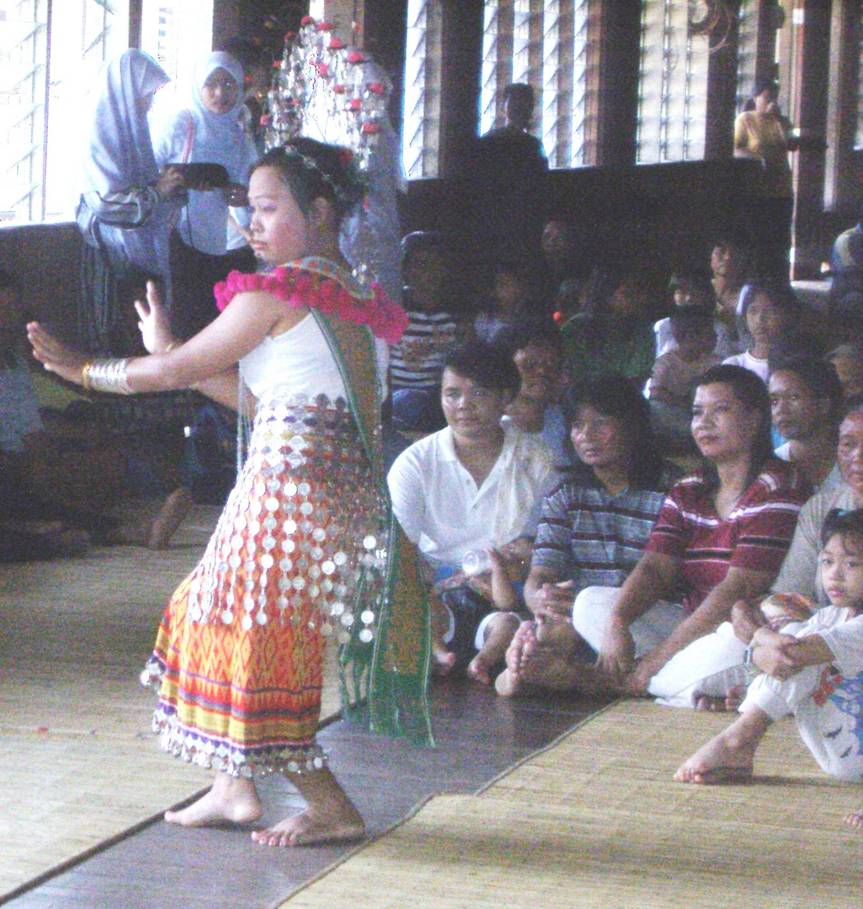
The students present me with a Iban beaded top that circles my neck and extended over the whole upper body in cascades of bright triangles of design. I greatly admire the traditional Iban costumes seen mostly in dancers, which flow sedately from side to side emphasizing their hand and leg movements but until I put this beaded top on, was unaware of the kinesthetic experience of wearing one. The beads are heavier than they look and feel like a sustained hug that shimmers when you move. It makes you feel enclosed and protected as well as out there dazzling the world. What an amazing feeling and delightful surprise. This is of course the way with costumes of all sorts. You really do feel as well as look different in them, but the Iban have managed to distill an experience in this beaded dancing top.

One last task is to attend the student presentations of the community placement elective. They have worked hard and incorporated our previous comments. The written report is superb. They answer our questions well. Their analysis is detailed and their intervention was creative. The PowerPoint presentation is a tad lengthy with something like 125 slides. Afterwards they crowd around excitedly to show us their video of the placements. A group of them have, in addition to everything else, done a 10 minute movie of the whole placement from the community visits, setting up their rooms and bed nets, interviewing villagers, home visiting and the health education sessions. The video is professional and slick with fades, background music and stunning photography. It would make a good advertisement for the medical school’s community based programs. We tell them they should put it on You-Tube and show it to the dean. They are shy but pleased. The video better captures the richness of the community program and the connection students have established with the village than any exams will ever do. The Malaysians were right, one shouldn’t worry about MCQs.

Labels:

Friday, August 25, 2006

Satok Market

The Sunday Morning Market in Satok is a wonderful experience. You can meet your friends there, make new friends, walk among the heady aroma of exotic spices, obtain the bounty of the rainforest, select the best crabs and locate entire string rays for sale. Many of the vendors arrive the day before and sleep overnight Saturday so they can start bright and early at 5 am Sunday. They say you can find wild boar, birds in cages and turtles, although I haven't tried.

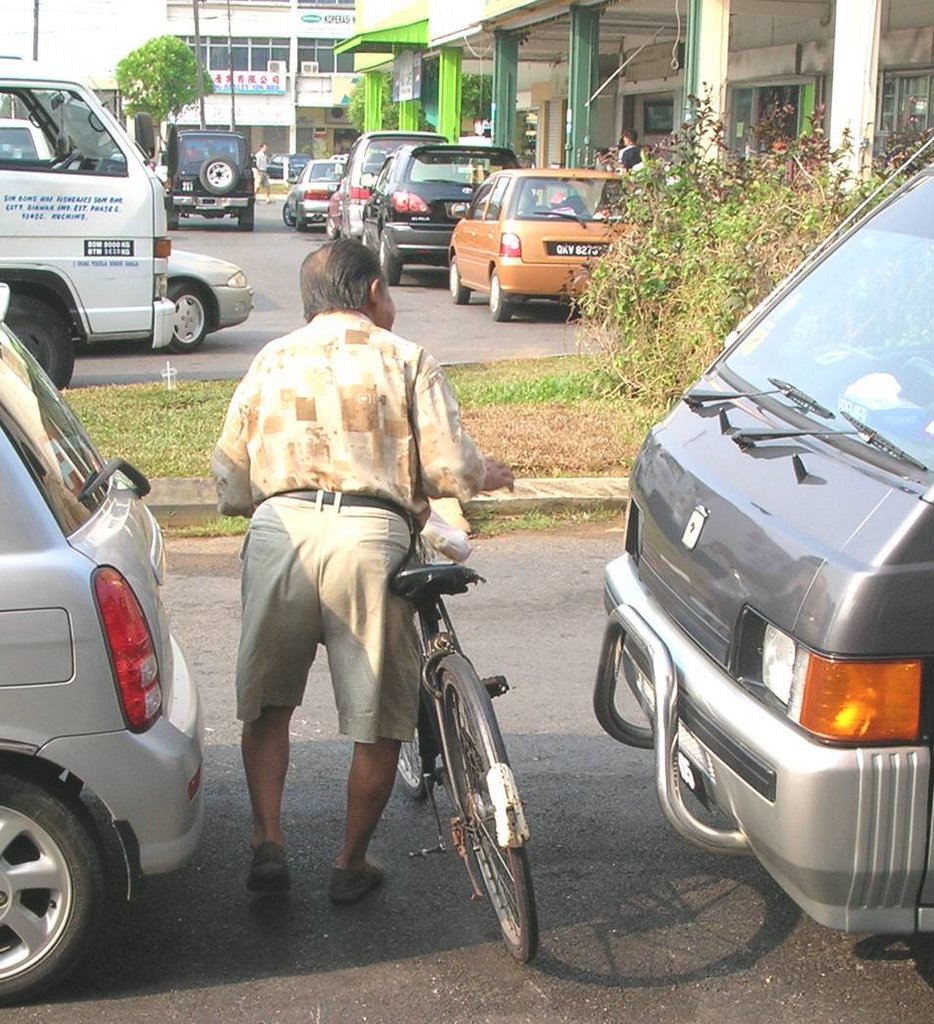
Even if you arrive at 8 am as we do, you will be late. Parking is at a premium as the whole area around the market is packed. Waiting for my friends to find a spot, I meet an older man who has already finished his weekly marketing. He had locked his bicycle close to the edge of the road near the entrance. We chat for a couple of minutes as he balances his weekly supplies in plastic bags on both sides of the handlebars and stores the dry products in the stuff bag at the back.

"I am come every week", he tells me. "Flesh, very flesh."

Wheeling his bike out between the crowded vehicles, he waves jauntily and rides off home obviously pleased with his weekly shopping. I am so much enjoying talking to him, I am slow with my camera.


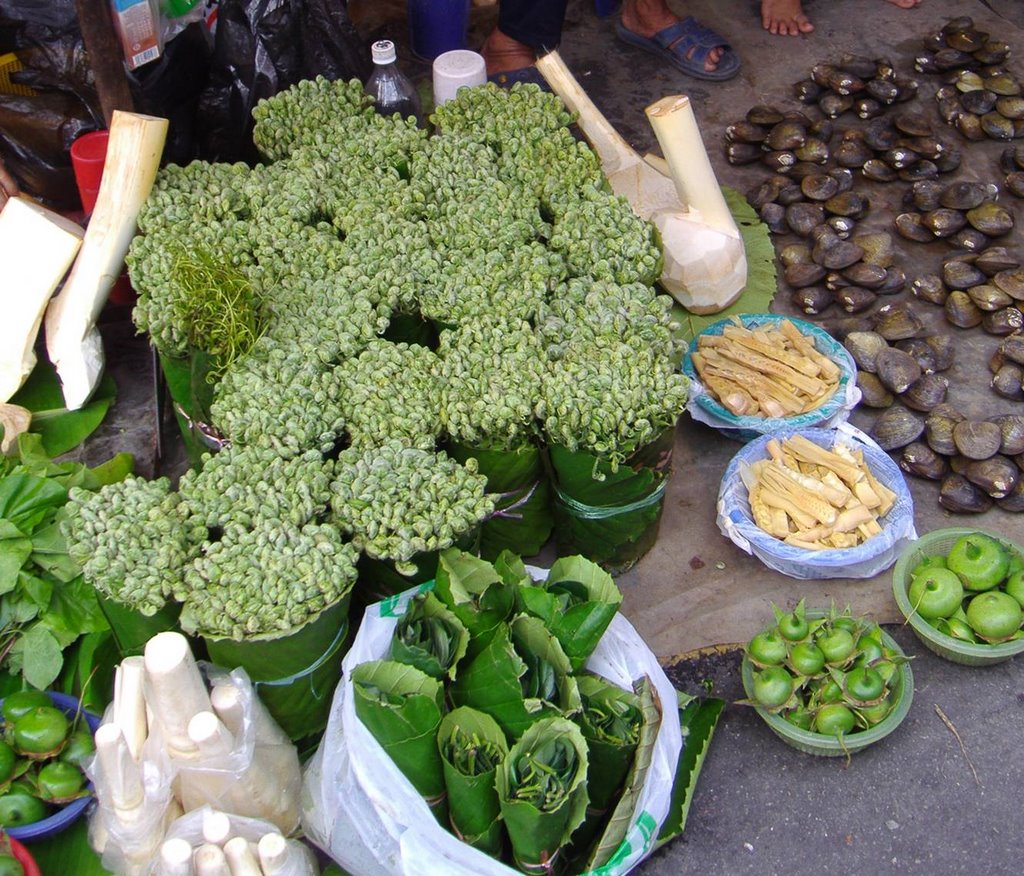
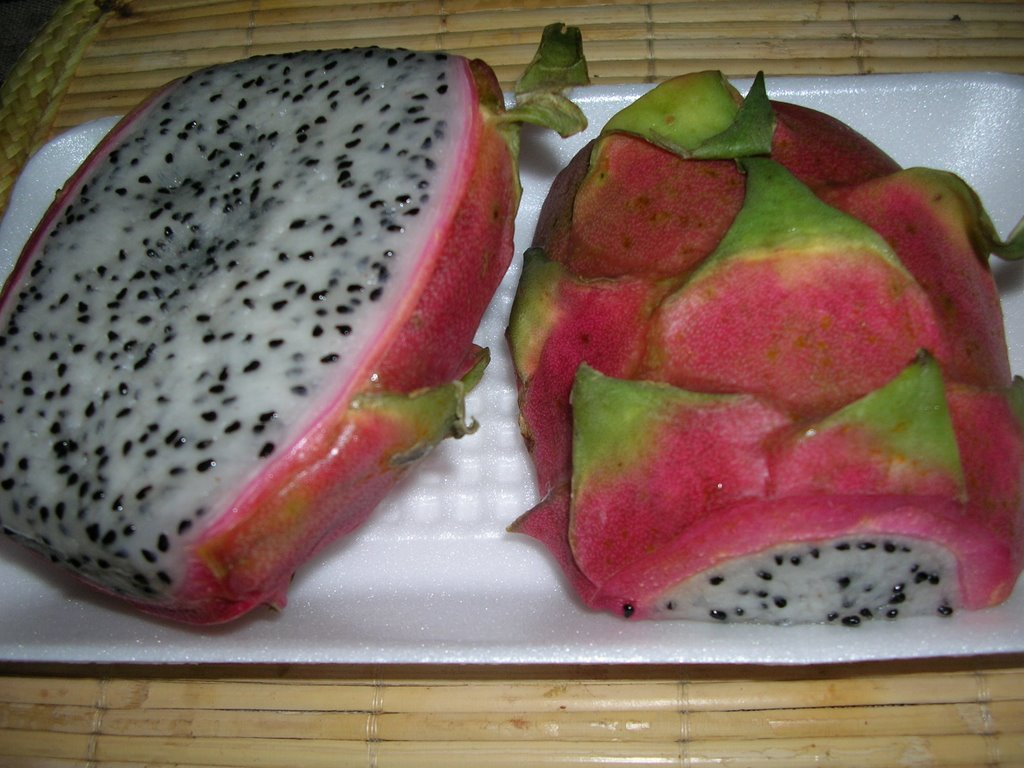
You can find all the specialties of the rainforest and South China Sea in Satok. There are large packages of midin or fiddleheads, their slender, coiled fern heads peeping out of wrapped banana leaf packages, bamboo shoots smoked or plain and snake fruit, buah salak, with its leathery brown skin covering a luscious,whiteish-yellow fruit which is eaten plain or with a soy sauce dip. Dragon fruit with its white flesh studded with small soft black seeds and bundles of wild greens of all kinds are all on disply. Some vendors have a small variety of different produce, obviously from their own garden. Others have enormous quantities of one or two items. A number have the ingredients for the complete meal in one place, chili pepper, onions, jack fruit, lemon, tomatoes and ginger. You don't need to go to anyother place to collect your ingredients.

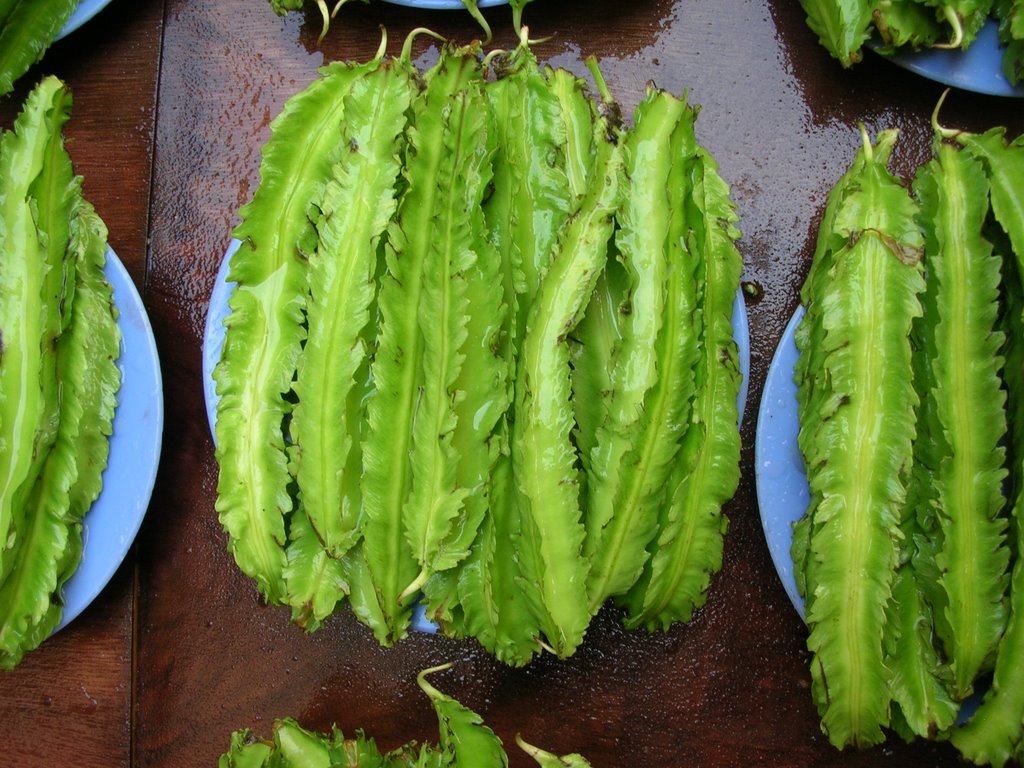
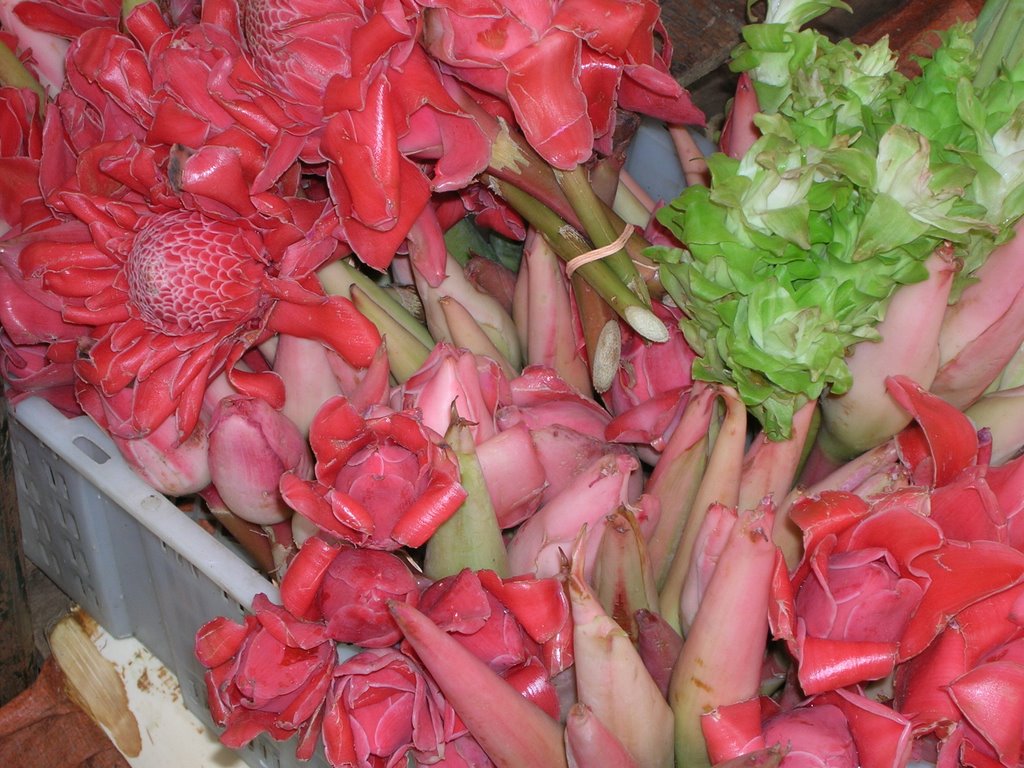
Ruffled beans also called square beans because they have four corners to them and long beans as well as many wild greens are in large piles and small mounds. The lovely flowers of the gingerplant are also eaten and are prettily displayed. We had one in our garden which was beautiful. I was horrified when the decision was made to eat it.

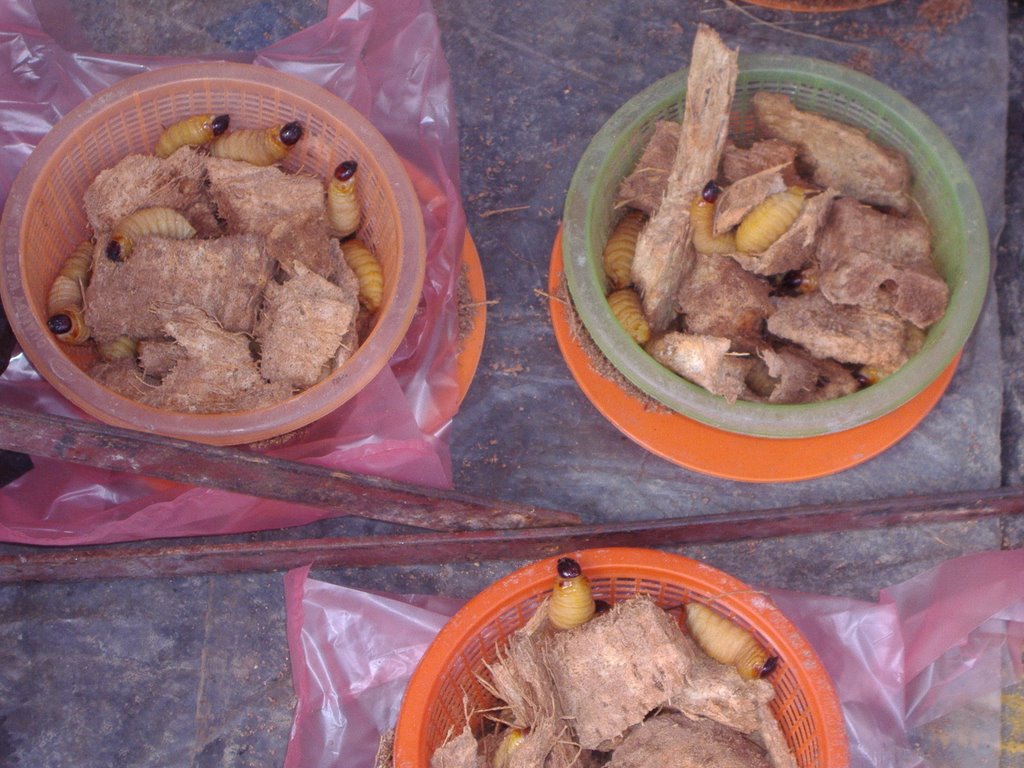
I watch several people who drop by the stalls offering sago worms or grubs. The fat white worms are still alive in plastic dishes that contain small pieces of sago bark. Care goes into selecting them. They are a real delicacy for some groups here such as the Melanau. They can be eaten fresh or fried and are said to be cure for asthma. I wonder if these tasty morsels are some of the items we watch people eat on shows like Survivor.


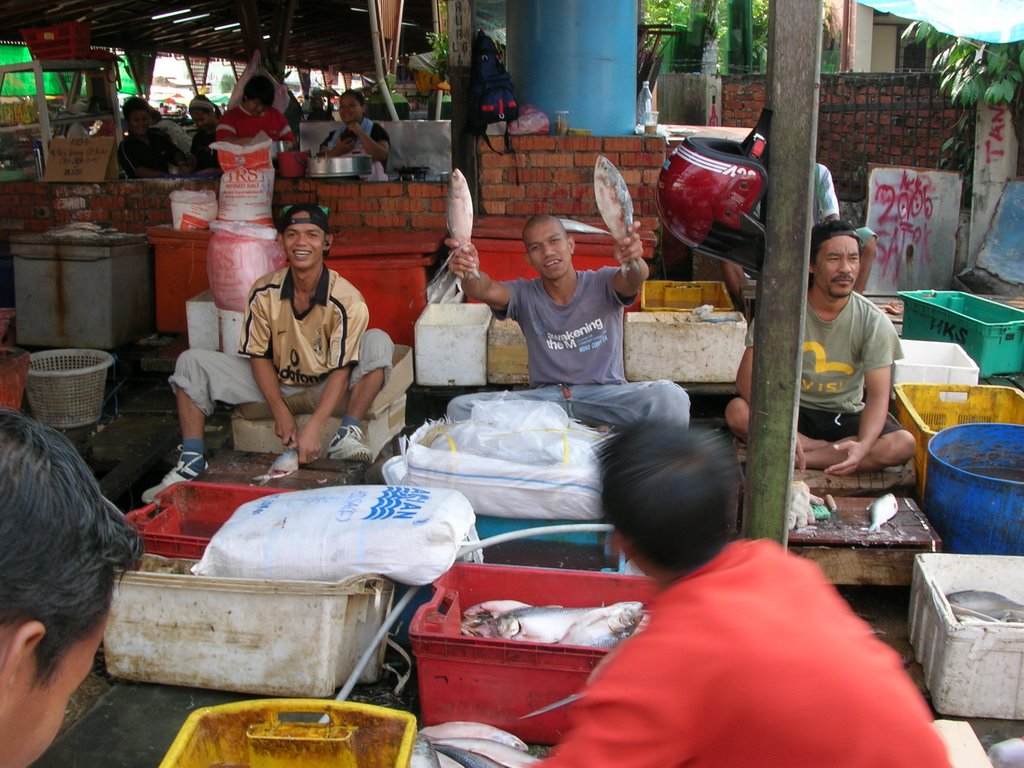
The fish section is particularly large and active. It includes both dry and fresh fish. To one side, young guys cut and gut fish in clean rapid strokes. They show me the roe or eggs of the fish which are sold separately and practice their English.

Crabs are held in plastic tubs with grates over the top. Each crab has been tied up with a thin piece of string over the carapace which holds their front claws so they can not damage each other. One customer wants only females. Assisted by the vendor, she goes through two of the tubs checking until she finds females. There aren’t many. It looks to me like she is going for them all. People here have very distinct tastes for fish. Some only buy shrimp at certain times of the moon. We look on the internet to see if we can find anything about why that is so and find a webside which outlines research being done on tide tables (phases of the moon) and quality differences. Why not, we think? More Old Wives Tales with a solid basis in fact.

While the fish section is the most crowded, has the most variety and seems to attract the most attention, there are also lots of live and dead chickens. The live chickens are trussed up in packages with string loops for holding them, so you can check them out and haul them home easily. The man selling dead chickens is declawing all the feet which will also be sold. Vendors don't do much sitting around in this market.

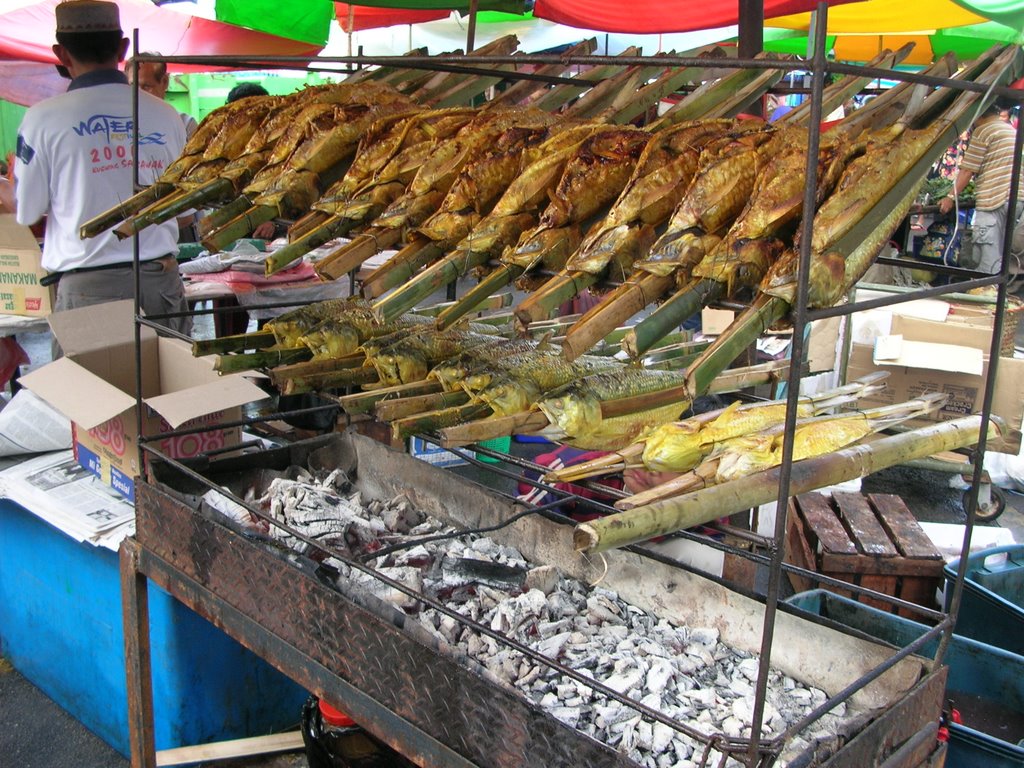
Some stalls feature cooked food for consumption on site and for take out. Bamboo skewers are being slowly cooked over hot coals in metal drums that have been sectioned in half. You can select the meat or fish you want and then wait for it to be cooked. This grilling is one of the finest ways for bringing out the taste and is a high art in Malaysia. Often the meat is dusted with spices. There is a section of the market where Indian woman have spread out containers of various different spices and curry mixes. Maybe we should just try a small amount each week until we discover the best one, I think.

I stroll down the fish section. Sting Ray is available. Today there is even a whole string ray which is rather unusual. There are red snapper in a range of sizes, which I can recognize from the Pacific coast. A variety of eels are offered smoked, dried and fresh. Periwinkles, snails, clams and shrimp of many sizes and colours are found. The dry fish section is huge. Even the smallest sardines have been sorted into sacks of different prices. While undertaking my tour of the fish market, one of the professors from the university hails me. Later I run into a couple from our compound. It seems everyone is here.


For a time I lose sight of my friends. I have been taking too many pictures. The young fellows gutting fish are concerned to see me scanning the area.

“Are you lost?” they inquire.

“No, I think my friends are lost, because they are so short I can't see them”, I say.


“I am tall, they can easily find me”.

Near the fish section of the market, right beside the entrance, there is a van packed with sacks of ice. Hygienic Ice, says the sign on the side of the white van. A young, well-built man pulls out huge sacks, loads them on the dolly and wheels them into the fish section. He brings back empty sacks. By the time he has his next dolly piled high with 2 sacks, it is time to move it to the fish stalls.

In Satok Market you appreciate the work that is behind the food we eat. You are aware of how many people are involved and how much the market and food is a part of life here. It's a whole world intimately linked with the land and sea.

Photos: square beans, man leaving Satok with weekly shopping, sago grubs, midin, ginger flowers, sting ray, BBQ treats, cocks, guys gutting fishes

Labels:

Sunday, August 20, 2006

The Hazy Daze of Sarawak

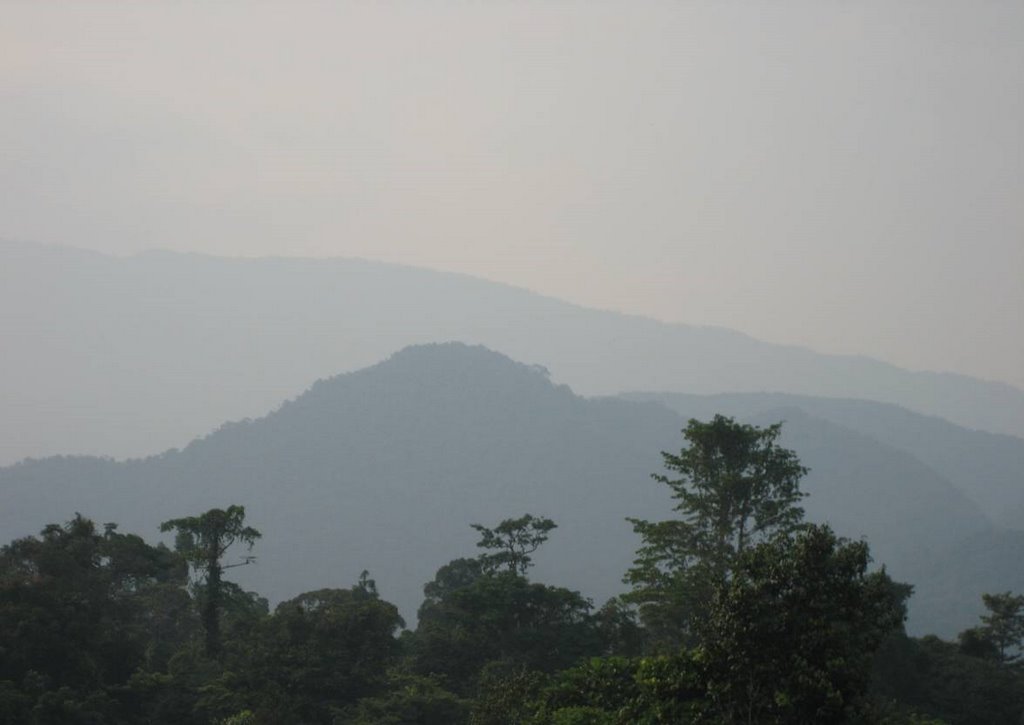
I am under a haze this week, something more than the Lazy, Hazy, Crazy Days of Summer in the song of the same name. It is the annual Hazy Daze of South East Asia. The Air Pollution Index has reached hazardous levels not only in Sarawak but also in mainland Malaysia. There is talk of issuing masks to everyone in the University campus in Samarahan, just an hour from downtown Kuching. Concern about navigational safety is rife with visibility reported at 1 mile. Office workers in Kuala Lumpur report that it looks like a wall of solid grey cement outside the windows. Essential supplies in some remote areas are seriously depleted because aircraft have been unable to fly due to poor visibility.

Smoke haze has been a problem in Malaysia for more than ten years. The first thing to acknowledge is that health issues are almost always political. Take breast feeding. Most women in Malaysia breast feed for somewhere between a week and a month, only 29% continue for the recommended 6 months. The Malaysian Ministry of Health is right now considering action against 8 of the 12 powerful multinational companies selling infant formula who have transgressed ethical marketing guidelines at least three times. I don’t know about you, but I thought this had been sorted out years ago. Kudos to Malaysia for keeping tabs on the infant formula multinationals.

So if breast feeding, the original motherhood issue, is political, just imagine the action around air quality. For years, Malaysia has been experiencing smoke haze for several months between May and October. The haze is worse in Sarawak and the southern part of peninsular Malaysia. Malaysians seem to believe the haze arrives on southwesterly winds from Indonesian Borneo and Sumatra. Both legal and illegal logging has increased due to population pressures in Indonesia with much of the land clearing being done for agriculture using ‘slash and burn’ techniques. Satellite photography verifies there are more than 600 forest fires on the Indonesia side of Borneo this week compared to 40 on the Malaysian side, so there is some truth to the allegation.

But air pollution or haze, is also a result of increased burning of fossil fuels in vehicles, industries and power stations as well as emissions from millions of inefficient cookers burning wood and other biofuels. Malaysia has been one of the most rapidly industrialized and motorized countries on the planet. So it is pretty clear, that there are plenty of home grown contributions to air pollution. In fact, neither country is off the hook.

And just in case you were starting to think this has nothing to do with you and your world, UN scientists have documented that haze affects rainfall and farming putting hundreds of thousands of people in the region in jeopardy. And for those of you further afield, a pollution parcel such as the South East Asia haze which stretches three kilometers high, can travel half way around the globe in a week. It has become, in the words of the same UN scientists, a regional and global menace.

The government’s response at the top of the haze crisis in 1997 was to make the Air Pollution Index an official state secret. For the next eight years there was a ban on publishing the air pollution numbers. Politicians were worried the numbers would give a grim and distorted picture thus negatively affecting the tourism industry, the second largest foreign exchange earner in Malaysia.

The haze did not go away and the complaints did not go away, just the numbers. Last year, August 10, 2005, the government lifted the ban. This year we have the haze, the complaints and the numbers. I, for one, am glad that we now have the numbers. I believe we never really address difficult health problems until we have the numbers. Now I believe we have a fighting chance. I also think we need more numbers. We need to know about the relative contributions of vehicles, industry, logging and agricultural burning. We need to know how much of an improvement we can get from the various mitigations available to us.

The situation parallels the history of air pollution. For the longest time we knew that air pollutants, such as sulfur dioxide and particulate matter, caused ill health but what we lacked were the numbers. How many people get sick and how sick? It wasn’t known if there was a safe level or threshold for pollutants, or how much of which components caused the damage. It is only in the last twenty years that a body of well-documented studies have been able to substantiate scientifically, with numbers, the damage to health.

One of the most quoted reports about air pollution is that of the dense London Smog of 1952. The dramatic increase in airborne particulates that occurred during the Great Smog was tracked and it was noted that one day later there was an overall increase in daily deaths which didn’t return to pre-smog levels until the smog cleared. Somewhat later analysis showed that the 4000 'extra' deaths during the smog were chiefly cardiovascular and respiratory deaths and they were highest in the elderly.

The association was however somewhat less than complete evidence for a causal relationship. Polluters were still able to say that the London Smog is a worst case scenario and we are causing much less impact on air quality and may not even be causing ill health. Outside of the Clean Air Act which made a dramatic difference to Londoners, very little happened for more than 35 years.

There were a number of problems associated with making the causal link between air pollution and ill health. One problem was in determining which of the many pollutants are responsible for ill effects and at which level or concentration. Air pollution was and is a “soup” of many different pollutants. Another was the ethical concern about doing human studies which may expose people to potential dangers. What we were left with was observation of current situations, many of which were small company towns without the needed numbers of exposed people.

In the late 1980s, C. Arden Pope, a PhD in Agricultural Economics at Brigham Young University, who up until that time had only done agricultural studies, noticed that when a mill was on strike there were 2/3 less children with respiratory conditions in a Utah town. I am not sure how, but he teamed up with DW Dockery, an environmental epidemiologist at Harvard. I imagine him thinking, “Professor from Harvard, an environmental epidemiologist, just the ticket.” On the other hand, maybe it all started because they were old friends having a poolside drink in small town Utah, sputtering in the blue air and exclaimed, "Got to be possible to show this is bad for our health”. Or maybe, having all his data in hand, Pope went to Dockery for help in documenting a possible association lurking somewhere in the numbers. However it came about, it was an inspired partnerships, for there were many detractors ready to pounce on the first and subsequent studies.

More papers followed. The science improved. Better testing was devised. We learned that PM10 – particles the size of 10 microns, the ones everyone had been measuring, weren’t the problem. It was the smaller particles of 2.5 microns that did the respiratory damage. So we switched from monitoring PM10 to monitoring PM2.5. Guidelines were altered. Once we had the numbers, despite their limitations, we started to move ahead much more quickly with control and prevention activities.

I am hoping that now we have the numbers to talk about, to improve and to augment, that we can begin to move ahead with control and prevention of air pollution in South East Asia. If I had my druthers I would set up a number of medical research grants specifically to address air pollution, respiratory and cardiovascular health in Malaysia. This effort is going to need the mobilization of the whole population, individually and collectively. The more numbers there are to convince them, the easier it will be.

I also can’t help but notice that these breakthroughs in medical science, such as Pope made in air quality, seem to be done by people working outside their usual professional boundaries. In this case, even outside of medicine. Medical science is so much based on methodical, incremental improvements that that is all many medical researchers do. Careers are built on it. Physicians as a result, think along traditional lines and often seem hampered in taking the creative leaps needed when a brick wall looms. This feels like a topic for a further blog.

Labels:

Wednesday, August 16, 2006

A Few Favourite Things

At fifteen I believed my values were immutable and formed my core, the essential part of me. When I first learned that values varied with circumstances and were changeable, I thought I was being dunned. It wasn’t long however, before I wholeheartedly embraced the idea.

So much so, that a good friend told me in a moment of pique,
“You are the most opinionated person I know. Your only saving grace is that you are constantly changing your opinions.”

We were at the Montreal Expo. We doubted we would ever find each other again if we separated, so we were trying to agree on places we both wanted to see. I told her the crystal in the Czechoslovakian pavilion was rock bottom on my list. I lost and had to go with her. She was annoyed because I loved it, unreservedly. I took her comment, then and now, as a compliment. Since I do hold strong opinions, I figure it is best to be open to persuasion and flexible about them. In some ways, I may actually cultivate this approach. For example, my list of favourite things is very site specific and includes newspapers here while I no longer subscribe to any newspaper at home.

Early Morning Walks
In Borneo, I rise at the time of the morning called by the Iban, Dini Ai Dalam or Deep Down Dawn. It is that moment just before the sky releases it's hold on the night. The proximity to night and the early stirrings of Borneo breezes ensure that it seems cool, even if it isn't. For people of the rainforest, it is a time when many journeys begin. My journey takes me no further than a nearby park.

When I start my walk, it feels as if I am the only one afoot. Even the security guards at the gate are drowsing in their plastic chairs. Gradually as my eyes adjust, I can make out others. The time called, Empliau Bebungi or Calling of the Gibbons soon follows. Imagination is needed here because there are no gibbons in my part of Kuching. By the time Tampak Tanah or To See the Ground rolls around I am on my way home.

The naming of the parts of the day for the Iban appears to be similar in some respects to the naming of the caribou by the Dene and of snow by the Inuit. For people who are connected with their environment, what matters gets noticed, described and shapes their world. So I hug the phrases close to me.

Early morning walks have become one of my favourite things in Borneo. We visited Mulu National Park last weekend, walking miles to and through caves and still I missed my early morning walks. It’s not a matter of endorphins as I only walk, never run or jog and only for an hour. I prefer to believe it is the magic of that hour in the rainforest.

Borneo Post
On my way back home, if it is there, I pick up a copy of The Borneo Post at the gate. My advice to people visiting another country is to read the newspaper. I follow my own advice. It gives a sense of what matters. My reasons for enjoying the paper parallel those of Somerset Maugham,who savoured The New Straight Times, a Singapore newspaper, when he was in Malaysia, for the quality of the writing and its local colour. Maybe too, like him, I will one day write more about it.

I read about the terrible vulnerability to fire of a longhouse with 135 doors and many open hearths. How a shouted warning from a neighbour, up in a nearby coconut tree, can save all the lives. A muted blessing since it leaves them to watch the conflagration of their home. Sarawak unfolds before me in the newspaper. “Running amok”, a expressive phrase we have borrowed from Bahasa Malaya to describe a person gone violently, uncontrollably mad, leaving havoc his wake, is uncommon but still happens. In Malaysia it is almost always associated with a parang or panga, a large, sharp blade readily available in most rural homes.

A riveting tale of maternal mortality averted is painstakingly laid out by a journalist. A Penan, one of the nomadic hunter and gatherers who still live deep in the rainforest, in a cashless economy, manages to bring his wife who is in prolonged labour, hundreds of miles downriver to the coast, where she is transferred to hospital. It is almost, but not quite, a fool’s journey. They start off when they are already in trouble. I imagine the father knowing, as he surely must know, either he gives it a try or he loses his wife.

There is no regular transport to or from his area. The labouring woman, the father and their 8 year old son hitchhike on logging rafts, Chinese traders and longboats. The agonizing trip and the assistance offered to the distressed woman are detailed. It is a convoluted water journey to a place he has never been, that delivers his small family to a far off sea. How, one wonders, have the mother and baby survived? We read about this heroic story because the father and son are now stranded without cash in the coastal town of Miri. Almost before the ink is dry however, money has been raised to transport them home. Even so, it may take them weeks to return home.

For someone who wants to motivate health workers about maternal mortality, this article is a gift. So too are the management articles that reflect Malaysian realities, the regular updates on the current Hand, Foot and Mouth epidemic and the useful critiques on local environmental impact assessments. The newspaper has become one of my favourite things.

Tropical Fruit Juices
Everywhere is SE Asia you can find fresh tropical juice. Coconut juice can be drunk straight from the coconut and costs about 30 cents. Pink guava, fresh lime with a salted plum added, leechee, pineapple, orange, watermelon and mango juices are available even in smaller stalls. My favourite is Aloe Vera juice made by peeling the long cactus spikes, slicing the pulp into stripes and soaking it in water. The pulp is jellied so can be chewed. It is sold in small plastic bags tied with rubber bands. We collect ours from a local shop where it comes is groups of ten for 15 ringet or about $4.00. During Ramadan, a big time for fresh juices, watching men push sugar cane through what looks like a washing machine ringer to produce sugar cane juice is a sure draw for me. Fruit juices are another of my favourite things, even canned juices such as jellied water grass, soya milk and ginger drinks.

Food Displays
The local food stands with fresh forest produce, dried and fresh fish and piles of fruit and veggies are favourites. I love to see the different arrangements, learn about local availability and taste new and unknown varieties of fish, fruit and vegetable. I like the sense of discovery when I see a new item, taste it, and then see where it grows. Among the fruits I continue to be astonished by dragon fruit from a cactus, snake fruit from the rainforest palms, mangosteens, star fruit, longons, leechies, rambutans, mango apples, and durian. It is as difficult to describe the different tastes. Imagine trying to explain the flavour of pineapple when you only know apples and oranges.

Durian requires a special section of its own. It takes a while to get used to it. We are just getting into durian season now. I know people who are planning trips to Sarawak who have waited for durian season. It is the only fruit I know that is actually forbidden in places such as airplanes and hotels because of the strong smell. The taste however is heavenly, something like vanilla cream cheese laced with marshmallows. People who love it are avid and the line ups at fruit stalls now are long. The fruit itself is large and covered with hard spikes

Among vegetables, the square beans, ruffled beans, midin or fiddleheads, long beans and a small green pepper a bit like cucumber, are wonderful just to look at never mind to taste. I am still looking for names for some of them. Fish stalls are full of dry and fresh fish I have never seen. What I can do is try them all. Menus are not much help since most are simply called fish dishes. People may not have names for them all but they know what they like. Dried fish and even fresh fish purchased at the last minute and carefully packed, are frequently taken as gifts when going to another area. I have a theory that half the cardboard boxes in the plane luggage hold, and there are many, are full of fish.

Baskets
Without a doubt, a lifetime passion for baskets has followed me. I began dissembling my vast collection before I came to Sarawak when it threatened to push me out of my own home. I found by giving baskets away to friends who appreciated them, I got to continue to enjoy them twice over, once for the memories of where and when I obtained them and once for the appreciation by others of their innate beauty. I most enjoy them when they are in regular use. I have resisted collecting baskets here. I take pictures of them instead of owning them.and appreciate them vicariously though my friends. It works, sort of. It is good to learn to appreciate things without possessing them.

Starter Kits
Another of my favourite things is discovering something about which I know nothing. Usually some kind of starter kit is needed. My kind of starter kits cannot be bought, yet anyway.


When I entered medicine, my old Sea Ranger leader came round to wish me well. Things were financially rather bleak. She was a housewife, so her visit and the ten dollars she gave me represented a major show of solidarity. I knew ten dollars would feed me for a month on rice, wieners and frozen peas, but I wanted to acknowledge the extravagance of her gift. So after some consideration I decided to give myself a starter kit of Jazz, something I had heard about, thought I would like, but about which I knew nothing.

With the ten dollars I managed to buy a thin paperback about jazz and three vinyl records from the remainder bin, Sketches of Spain by Miles Davis, The Composer of Desafinado by Carlos Jobin with Ipanema on it and one by Thelonius Monk. Maybe I liked the cover art, or maybe, not knowing any of them, I based it on price. It took me a while to get into Monk, but the other two records and paperback were the best possible introduction to Jazz. It opened a small window on a whole world that continues to bring me enormous pleasure and serves as a constant reminder of the importance of support.

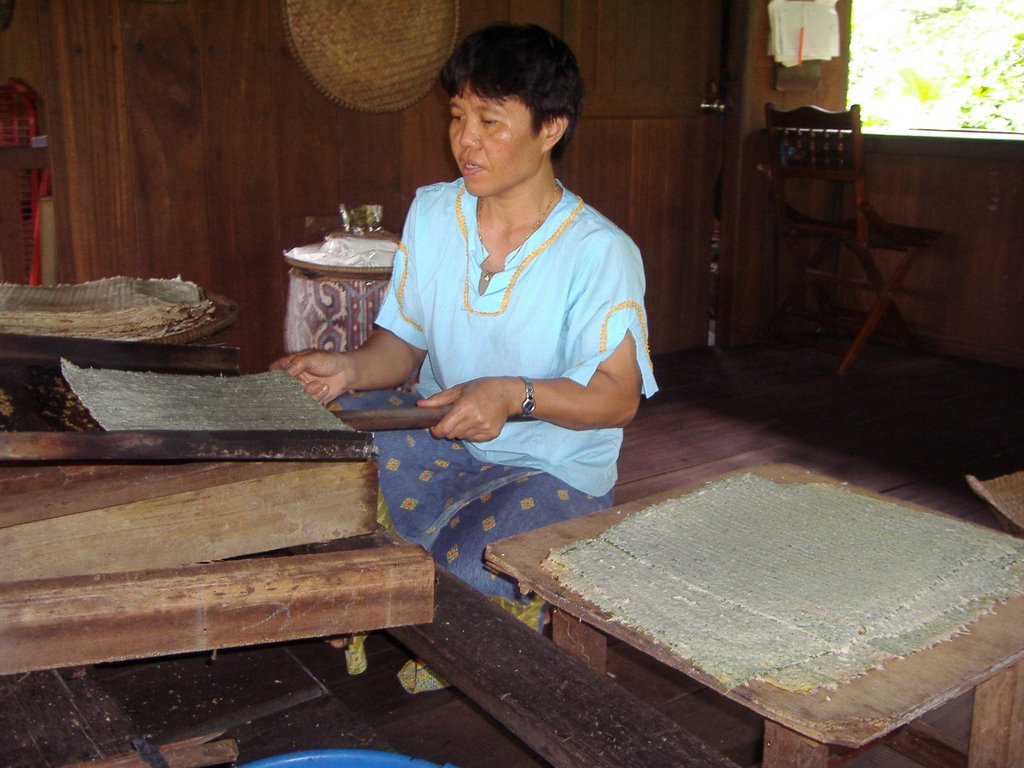
I am working on a starter kit about sago. Sago biscuits are one of the tourist items in Sarawak. While I have heard of sago pudding and tasted sago biscuits, now I am learning how it is harvested in logs from the forest, floated down the river to the mouth and then milled into powder flour and beads for making food. The effort seems enormous. At the cultural village a woman starts with the cut logs, goes through the whole process using a grinding stone and large frame sieve and then sells her tiny beads of sago. I have yet to find out why it is important in this area but I am still working on it. Some starter kits need to be developed.

Wild Flowers
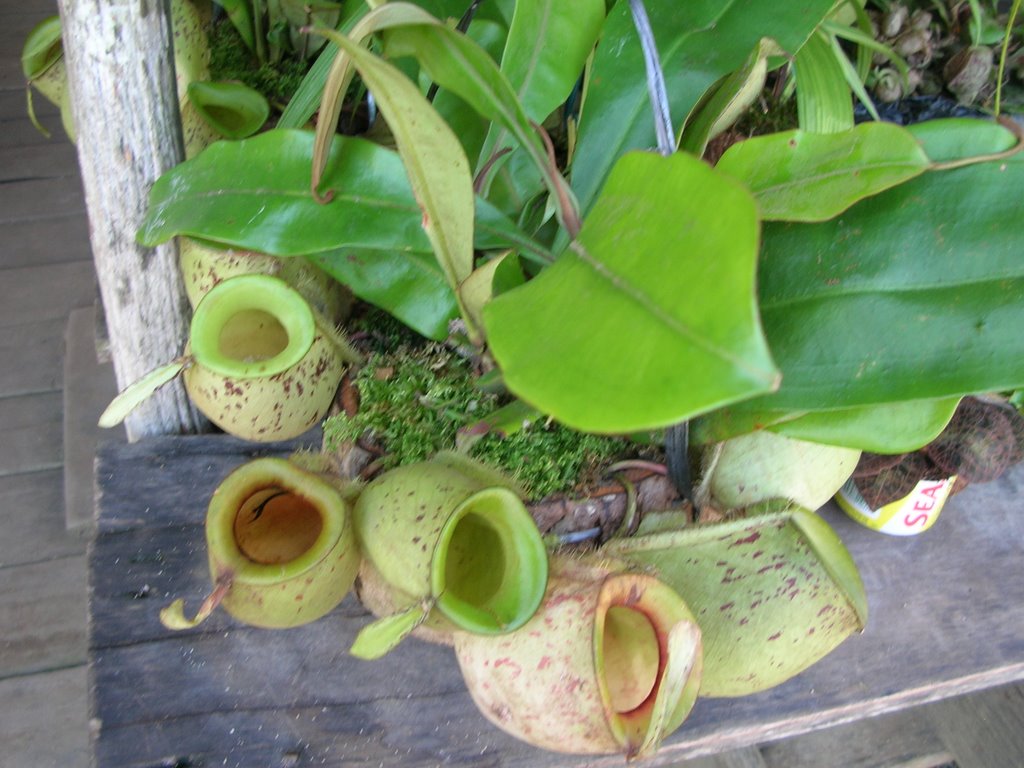
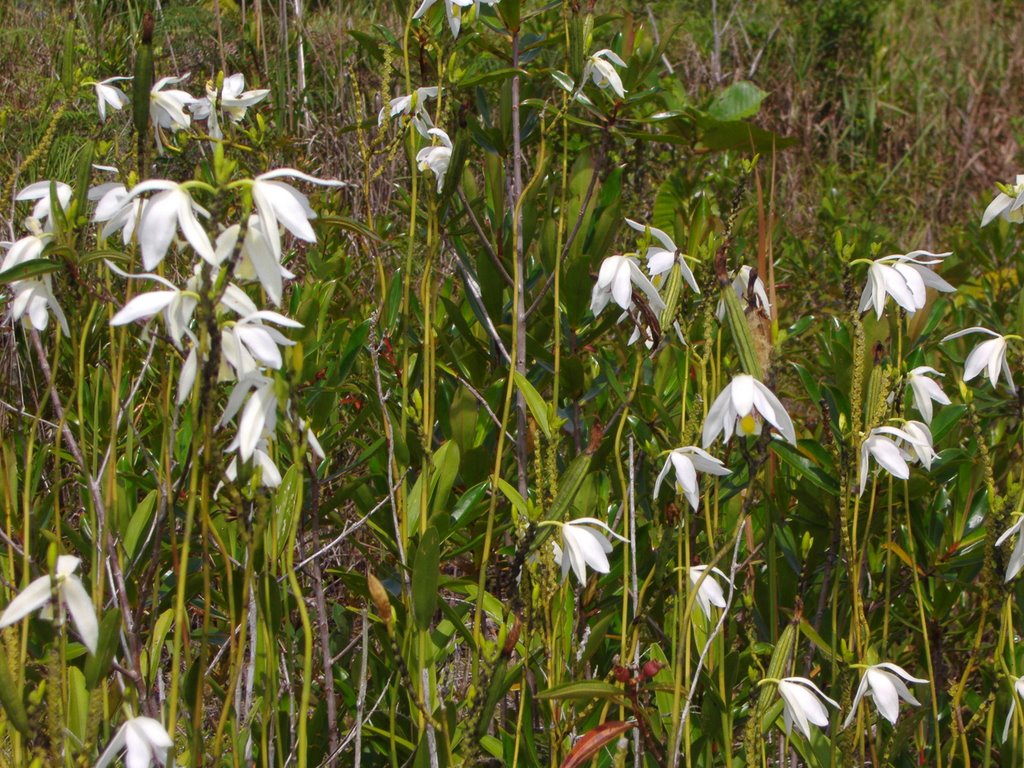
I enjoy discovering the wild flowers of a place, where they are found and when they bloom. It makes me feel more linked or connected to the place. On canoe trips I take pictures and press flowers. In new places, I walk and drive the rural roads on the outlook. I record the sites and dates and return when I can. I have identified “new-to-me” flowers from a car window at 100 kpm. This is not as difficult as it sounds. If you know the height and colour of the usual wild flowers found in an area, what sticks out is likely to be something rare and unusual. When you stop and verify it is so, your companions are simply amazed and you have established a certain reputation. Imagine such a one being in a place where the wild flowers, the common wild flowers, are orchids and pitcher plants.

I am not alone in this love of orchids and pitcher plants. Rare and beautiful orchids and exquisite varied pitcher plants are on sale for pennies in many places. But unless the buyer is very careful, such plants do not do well in urban gardens. Surprisingly, they like the shelter, humidity and fecundity of the rainforest more than city yards. So there are lots of dead or dying orchids and pitcher plants around.


The people selling the plants are barely surviving on the margin. The issue is a difficult one, similar to the survival of gorillas in mountain forests in Rwanda or elephants in Kenyan game parks. The solution needs to be approached in ways that benefits local people and rewards them as the protectors of this bounty. Lots of innovative programming is being done in Africa at present, I sure hope it gets to Borneo in time. This is one of the aspects of sharing my favourite things. I know we can only really protect and care for the things we know well. I want others to enjoy them but I feel an overpowering need to protect them. It’s a battle I don’t win all the time, but I keep trying.
Photos: Pitcher Plants, Dragon fruit, NO Durian sign; fish stall in market, sago logs, refining sago, baskets and common roadside bamboo orchid.

Labels:

Saturday, July 29, 2006

River Cruise

The department had a brilliant idea this year and arranged a river cruise for our annual party with families. A river cruise includes a meal, a tour up and down the river as well as a cultural show.

Kuching is described as "without a doubt the most pleasant and interesting city in Borneo and one of the most attractive cities in South East Asia" by the Lonely Planet. This I can attest to. The river cruise is one of the many day attractions available.

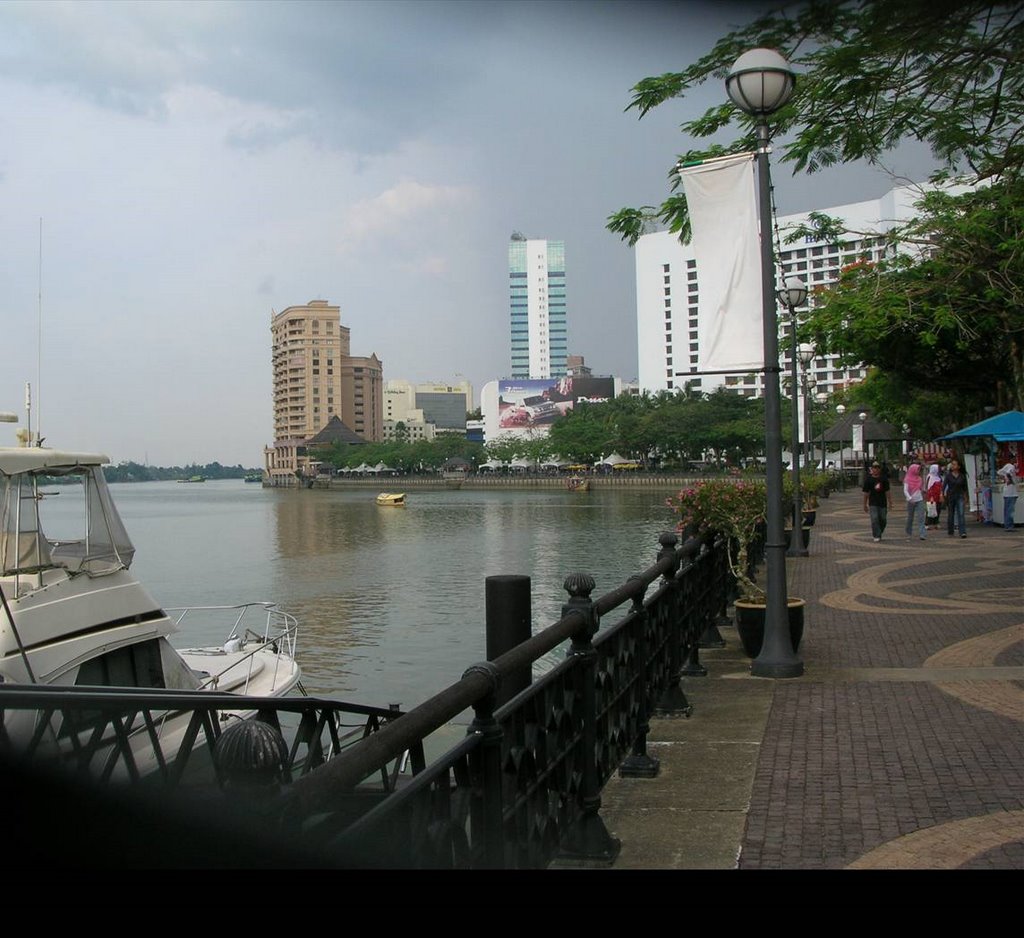
The South Bank is now a destination on its own with a Chinese pagoda, towering palm trees, playgrounds for children, green spaces and ornate light posts along the harbour. The walk along the harbour has been paved and landscaped to provide a lively promenade at the water edge right in the center of the city.
We stroll over to the pier from our hotel where we will be staying overnight.

The river boat sets off in the early evening from the south bank of the Sungai Sarawak River. We have the whole lower deck to ourselves where we are provided with a sumptuous buffet dinner of crab, prawn, fish and chicken accompanied by spicy fiddleheads, okra and bitter gourd. There seems to be plenty of variety to satisfy the children as well as the gourmets in our group. The dinner is followed by huge platters of fresh pineapple, musk melon, winter melon, mangoapples and rambutan.

Speeches are given, departmental roles passed on, gifts bestowed and farewells are made to those leaving. A beloved professor, who has been instrumental in setting up the medical school as well as the department and in establishing the Master's program in Public Health is leaving so there is a mood of appreciation as well as of loss. After the meal we join others on the upper deck of the cruise ship to watch the river sights as we move slowly downstream and then up.

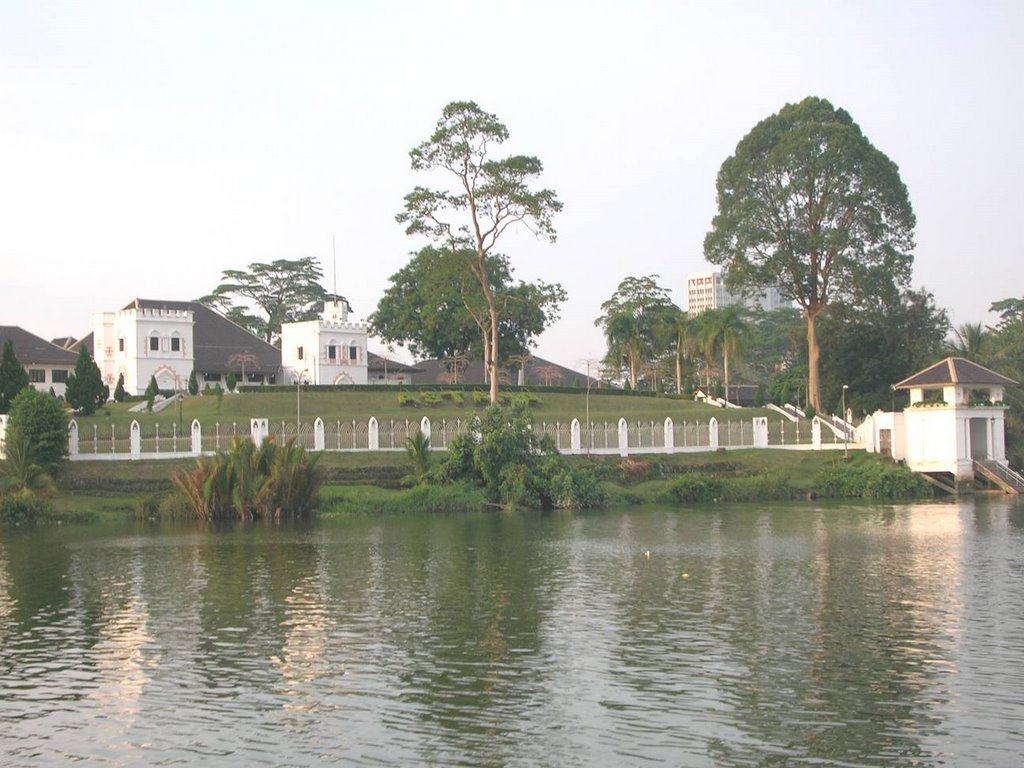
The original government house of James Brooke, called the Istana, on the north shore can be seen etched against the sky. The single remaining building of Fort Marguerita sits straight and proud on the south bank. Further downriver the magestic golden tops of the green and white minarets of the riverside mosque towers above the bank.

Tampangs, local river taxis ply back and forth on the river. You can take one of the regular commuter tampangs across, in fact many people commute that way, for 30 sens (about 0.10 USD). It is undoubtedly among the cheapest water transport in the world. We have done it just for the boat ride. It costs slighty more to make a short tour of the harbour but again is well worth it.

Boats of different sizes, shapes and purposes are tied up along the river. There is activity at the Brooke Dockworks.
As we head upriver we reach the Prime Ministers home almost at the mouth. This is where we turn around.


Later as darkness falls we are treated to a cultural display with Iban, Malay and Bidayuh dances. The dancers are very good at getting audience participation and have most of the group up and moving at some time in the night.

We return to the dock late but with the South bank so well lighted we feel secure walking home.
Most of our group spend the rest of the night shopping.

Malaysians hold some kind of record for recreational shopping even in South East Asia and my friends are no exceptions. Amazingly according to polsters, 15% of Malaysians spend time in recreational shopping or maybe it is that Malaysians spend 15% of their time recreational shopping? Recreational shopping is shopping without intent to buy. The malls of course have responded to this and are full of things to do and see.


When I ask my colleagues what they did at the shopping mall, they say they contributed to the recreational shopping statistic as they met up with all the others in the group. Of course shopping malls are air conditioned so that may account for part of the attraction. But whether you want to shop recreationally or not, Kuching has one fine river cruise waiting for you.


Photos: Promenade on South Bank; tampangs; mosque; cultural show and sunset over PM's house.

Labels:

Tuesday, July 25, 2006

Longhouse Visit near Bintangor


About 50 miles east of Kuching, longhouses begin to appear. Most are located along rivers, some visible from the road. In the forest the longhouses are perched atop long pole stilts high above the rainforest floor. They are an example of linked cooperative housing that has been around for ages. Hand hewn long boats that hold as many as 60 men are collected on the river below the longhouse with paths leading up the bank. The long boats are almost unchanged in appearance from the war boats that established the Sea Dyaks as fierce pirates of the South China Sea. Young Iban men still race them, a wondrous sight of 80 synchronized paddles flashing as they fly across Kuching harbour.

The distinctive feature of a longhouse is the communal area, a long, tall, covered area opposite the doors, that extends the length of the longhouse. The communal area has a floor of hand-sawn, dark, wide planks from the rainforest smoothed and polished by the passage of many feet. I can’t imagine the effort required to do the work by hand. And it has created a floor that actively responds to your barefooted crossing. The ceilings are high and with the many large windows ensure Borneo breezes can move through.

When I first heard students talk about doors, I thought I had misunderstood or that they were talking in Malay and it just sounded like English, or any of the numerous assumptions one makes when confused. This happens fairly frequently here with the constant switching between English, Chinese, Bahasa Malay and Burmese that surrounds me. Finally after it has gone on for a while, as in, "How many doors? Is that all the doors? Are there any doors on the other side", I inquire, “Why are we talking about doors?” This was before I had actually been inside a longhouse. I like to think the penny would have dropped if I had visited a longhouse before we had started to design survey questions for people living in one, but that may be wishful thinking. There is a shocked silence as if I have really this time confirmed how ignorant Europeans are, then a gentle, tinkling giggling that swells into rolling-on-the-floor laughter until someone gasps out, "Behind each door is a household” as a translation for me.

This longhouse near Bintangor has 114 doors. The walls of the longhouse are panelled in the same dark woods of the rainforest as are the floors. All of the work was done by those who live here with materials drawn from their world. The walls are unadorned so their beauty catches you full force when you first enter. Hilton has built a longhouse Hotel at Batang Ai which most guests reach by helicopter from Kuching. Miraculously, although the communal areas lack the people and easy camaraderie of the Iban porches, the architect has managed to replicate that same powerful sense of the longhouse.

People of course are many in a longhouse, especially little people, with approximately 15% of the population under five. The layout of the longhouse makes it possible to easily care for groups of children and engage them early in the tasks of the longhouse. During the day nets are patched, rattan mats woven, baskets created and cloth woven in the covered communal spaces often surrounded by small children. Parallel to the roofed part of longhouses there is an floor extension made of poles and covered with rattan mats, that is only partly covered. Tasks such as winnowing, drying, sorting and processing crops are done on here on the porch with children underfoot.

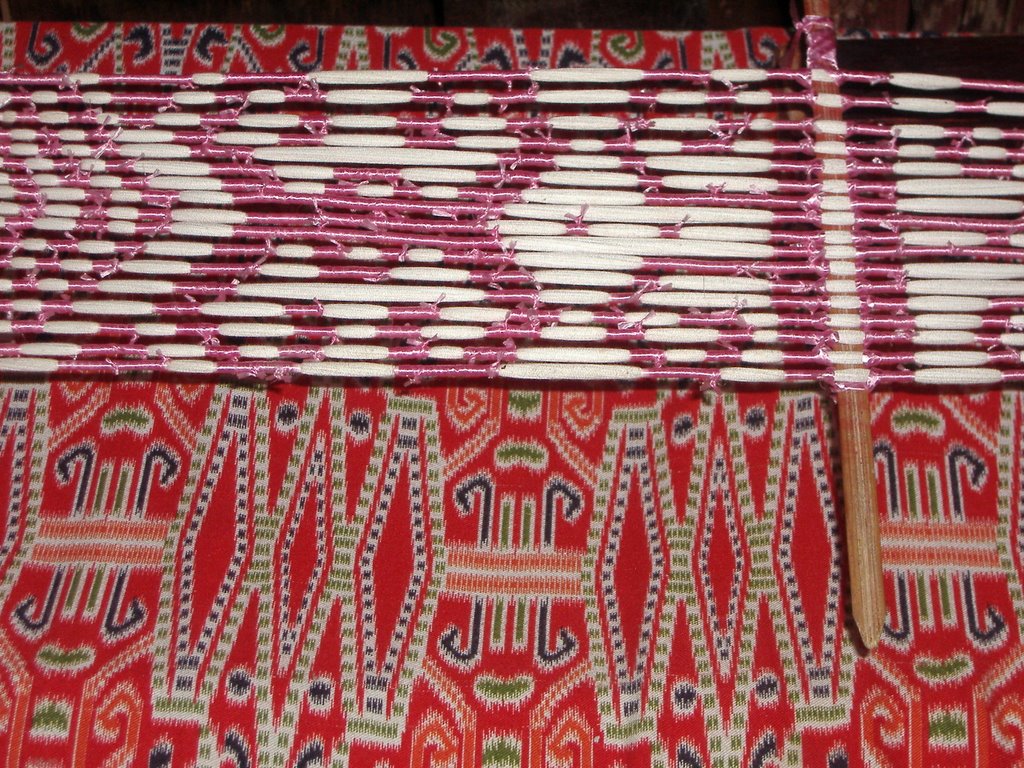
Today the 4th year students who have been working in this longhouse are having a celebration with some health education thrown in and the longhouse is decked out. This longhouse has two sections facing each other and is set closer to the ground than most. The display is set up in one side while the food and entertainment is on the other side. A decked out longhouse has its pua kumbu displayed. Pua kumbu are the woven art of the Iban, a textile which is well known amongst textile connoisseurs and museums because of the exquisite and intricate patterns created using the warp-ikat technique. Ikat hand woven blankets are the high art of the Iban. At present there are weavers in only a few longhouses but more young women are learning.

Pua kumbu are made of two parallel strips of cloth woven on a backstrap loom and then sewn together in the middle. Shorter sections of cloth are used for women’s skirts and made into vests and shirts for the men. This style of ikat is found throughout Southeast Asia in the sophisticated cultures of Laos, Burma, Cambodia and Thailand as well as in China and Japan. The version found in Borneo uses natural dyes of creamy red brown, chocolate brown, black, burnished red and ochre with designs that are not only finely geometric but that depict the animals and events of their lives. Pua kumbu are vibrant with crocodiles, people, spirits and birds as well as the decorative images found elsewhere. It is amazing that such an art survived in Borneo and astounding that it flourished.

Pua kumbus play an important part in the rituals and culture of the Iban whose oral culture goes back at least 40 generations. The pua kumbu are historical documents that captured spectacular feats, celebrate history and delight the eye. They pulsate with liveliness. The rest of the world is only now discovering pua kumbus. The cost of smaller pieces has increased four or five times over four years, with some of the older finer examples selling for thousands of dollars.

I am absorbed by the beautiful collection of pua kumbus owned by this longhouse. An elder
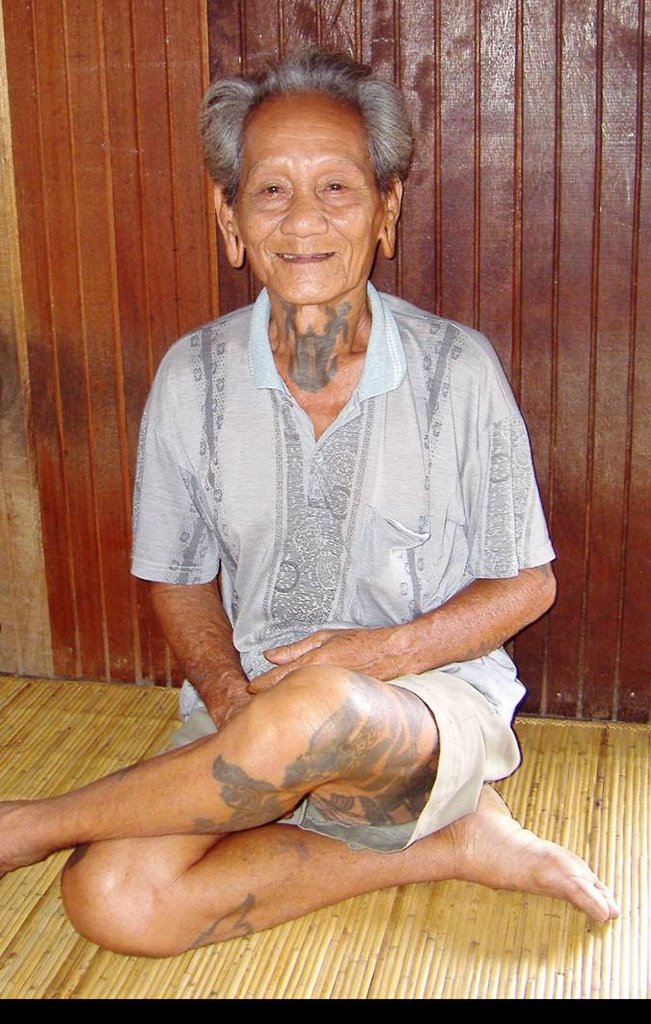
watches me taking close-ups of them all and smiles. He has a gentle, engaging face. I greet him and he suggests through an interpreter that I take pictures of his tattoos, positioning himself so more of them can be seen. There now are few people under 40 years old with tattoos. He is, they inform me, over 80 and the tattoos attest to an active life as a warrior. I wonder where he was during the Japanese occupation of the war and what stories he could tell. I hope there is some program where the young people are collecting the stories of the elders here, but when I inquire, no one seems to know.

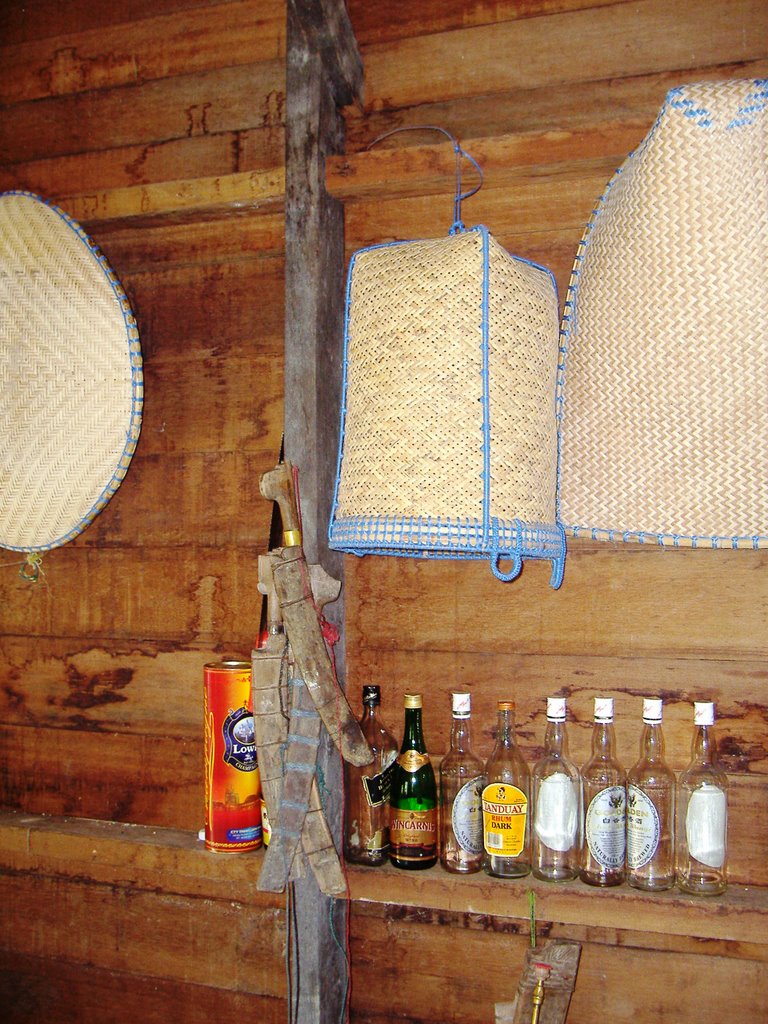
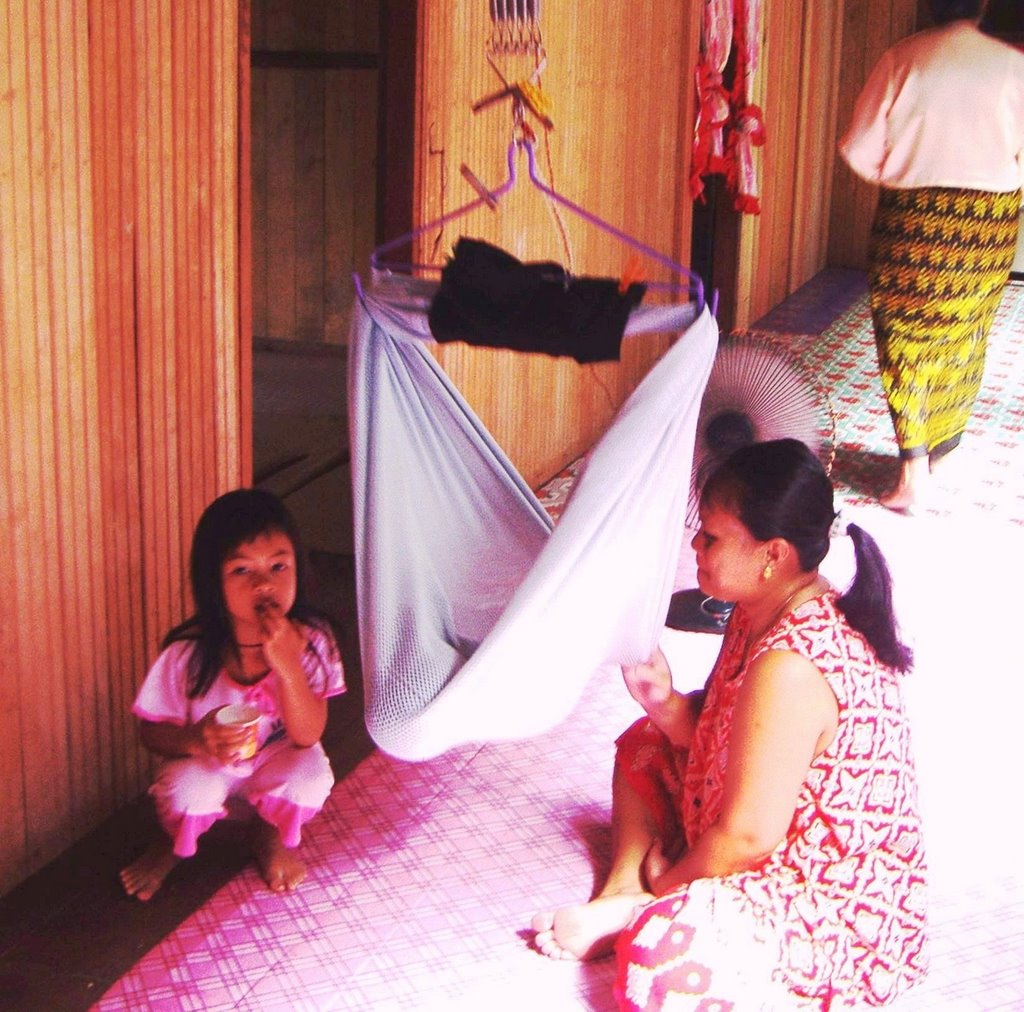
The longhouse we are visiting is progressive and has a female chief. We are invited into the living quarters. Behind the doors, the individual homes contain sleeping and cooking spaces. Ancient enamelled Chinese pots hold quantities of rice, stacks of rattan mats lean against the wall, babies are lulled to sleep in swinging hammocks as do the Cree Indians in the north and baskets and knives are suspended from the wall ready for use.

We are treated to an orchestra of brass gongs and women dancing in their filigree silver headdresses with long languid hand movements. It’s a whole new world for me and I am grateful to see it as it is now.

Photos: Longhouse with drying mats outside; longboats tied up on the river side; communal porch; kitchen wall; babe in hammock, pua kumbus, pua kumba with overlay showing how warp threads are tied; elder with tattoos; Iban dancer.

Labels:

Thursday, July 20, 2006

Across the Rajang River


Some wonderful travel books about Borneo have helped make it into an exotic destination. Redmond O’Hanlon headed Into the Heart of Borneo while Eric Hansen was the Stranger in the Forest. Michael Crichton’s Travels, includes Borneo in his tales of out-of-the-way places. The mighty Rajang river is the usual route taken, guides are procured and life-threatening adventures ensue. Quantities of tuak, a local homebrew, are consumed in long houses along route and wild parties continue through the night. Hospitality upriver is legendary but not always what gets classified as family entertainment. But the tourist industry is nothing if not remarkably adaptive and when I was in the local tourist office purchasing tickets for the Rainforest World Music Festival there were several families booking trips up the Rajang River.

I have been rereading the books so I know that real adventures in these parts set off from the Sibu wharf in Kuching, head down the Sarawak river to the South China Sea and then turn east for 5 or 6 hours until they reach the mouth of the Rajang river. The Rajang is a busy water channel in a way that most of our rivers are no longer. It has ocean going ships as well as tugs, fishing boats, Chinese river launches and log filled barges.
Sibu is the premier port on the Rajang, and lies a couple of hours in from the mouth. One of the early Chinese trading centers and settlements, it is a modern bustling port. Locals refer to it as a cowboy town by which they mean, I think, that there is a certain kind of Wild West lawlessness that is common to harbours around the world. It has the best selection of DVDs I have seen, most of them from China, as well as a lovely waterside park and a bustling harbour.


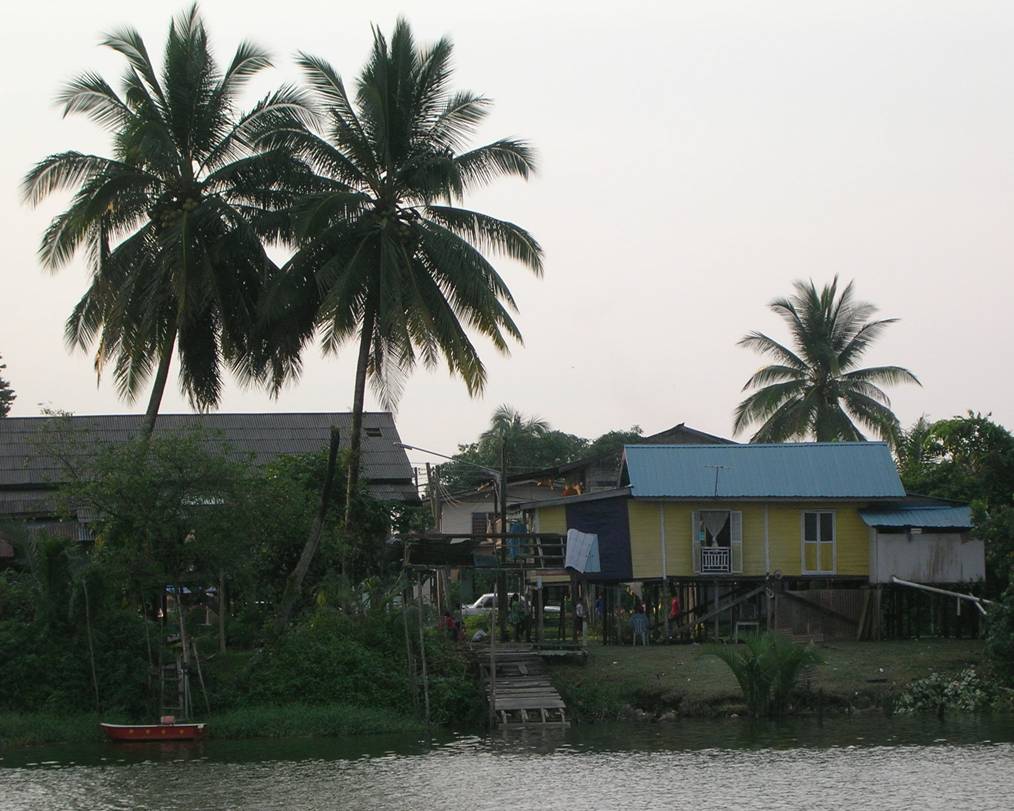
I am flying in for an overnight visit. The harbour and river remain the hub of Sibu. Malay houses perch serenely on tall stilts over the banks, their curtains flapping in the breeze. Water taxis ply their trade along the river edge. Hanging orchid gardens are suspended from windows, sheltered from excessive sun by black net.

In the 4th year of the five year medical course, students do three months of field work. As a group they meet and discuss health concerns with a rural community to arrive at a topic of study. The communities are very keen to have the students so efforts are made to go to different areas. The WHO directive of “No survey without service“ is taken seriously and towards the end of the community stay not only do students report to the community on their findings but some intervention, usually health education, is undertaken. The students will be staying in a village outside Sarekei, which is further inland across a couple of rivers.


There are approximately 80 students in each class with 10-20 per group. Staff from the school stay with the students in the field, so the movement and organization of such placements are massive undertakings. In this area, medical education in the developing world is ahead of the rest of the world in connecting with the community in a meaningful way.

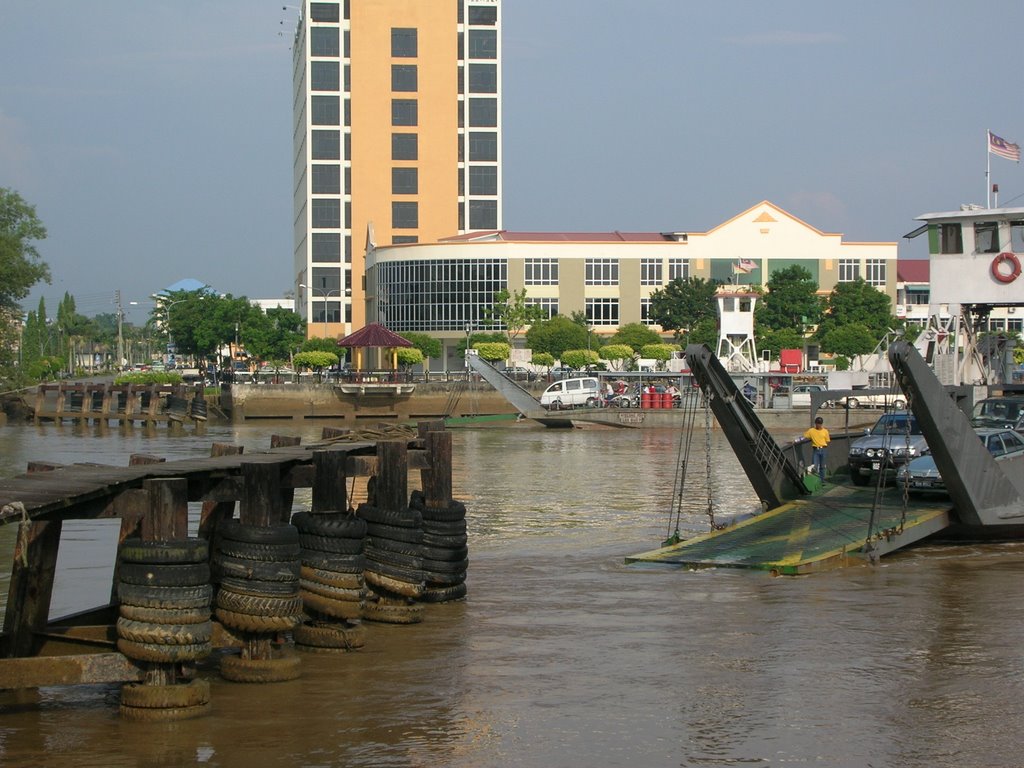
A brand new bridge takes us across the Rajang. I miss the forty minute ferry that used to be required with vendors at both ends who sold guava slices coated in spices, ice cream and hot snacks. There is a rhythm about working ferries that adds to a river. The loading and unloading of trucks, motorbikes and vehicles, the sweep of ferries past each other midstream and the swing of their extended front lip over the concrete loading platform on each side.

We drive for an hour, the roadsides edged with wild bamboo orchids, to reach Sarikei, where two small ferries maneuver back and forth in a slow dance to deliver us right into the heart of Sarikei.

We meet up with the students in the divisional headquarters after they have visited the village. They have prepared a knowledge, attitudes and practices (KAP) survey on hypertension. Our students speak Bahasa Malay, but they have found that they don’t understand the dialect in this village all that well. Field work provides an invigorating dose of reality and is an eye-opener on many levels.

The acting in charge, a medical assistant, gives us an overview of the health in his region. A map showing the health units is prominently displayed on the wall. The area covered is extensive, settlements are small and scattered and the whole area crisscrossed by rivers but few roads. The single, new hospital in Sarikei serves a huge hinterland.

I caution my students when looking at the facts to be alert to the "factoids". "Factoids", by my definition, are facts with a charge, usually an emotional one. The "factoid" that jumps out at me from all the statistics presented about this division is that although 24 posts have been assigned for physicians, only 4 have been filled and none of the physicians are on site.

The concentration of physicians in urban areas is a serious problem everywhere but it serves as another reminder of why we are here and why this program is so crucial. As we leave, the district nurse reminds the students that they are going to need their bednets and a plan to ensure a safe water supply. It is one thing to know something, it is quite another to actually have to deal with it yourself.

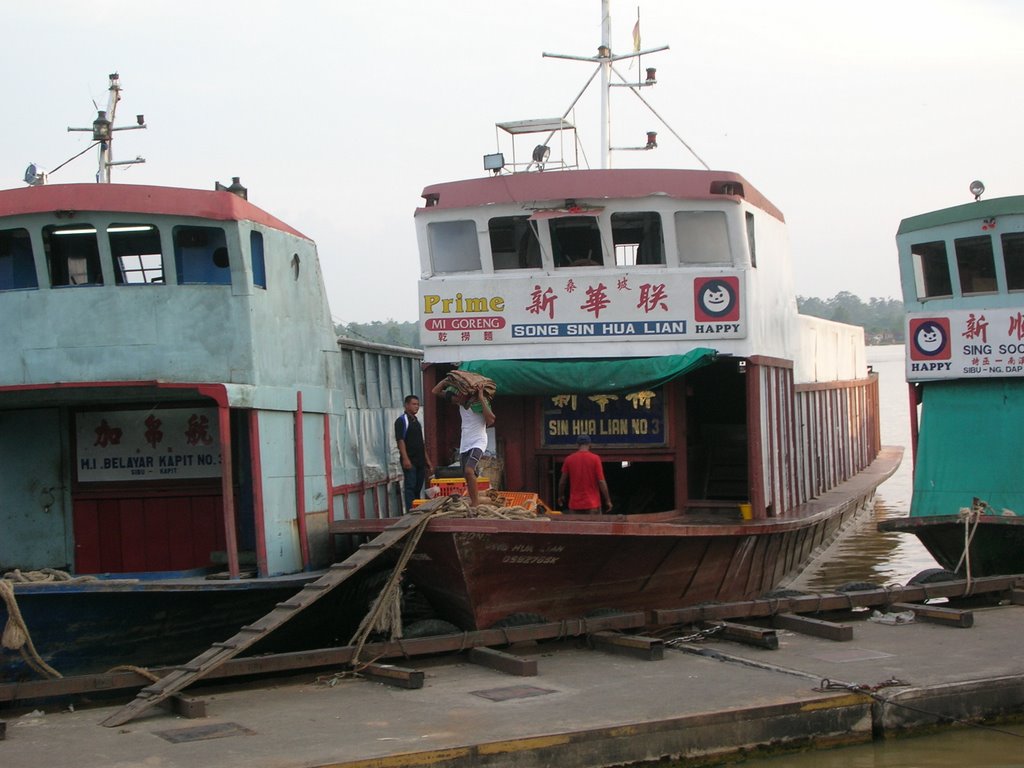
Back in Sibu, river taxis move people and things from one site to another. Long boats are clustered at various spots along the bank. What Sibu doesn’t seem to have is many container boats. Boats on the Rajang appear to be loaded and unloaded by heavily laden men moving steadily up and down the sloping planks between the deck and the dock. We watch a Chinese craft unload huge creamy slabs, the men tramping up the gangplank to heave them in the back of a waiting truck. I take pictures not really knowing what I am looking at. Later my colleagues tell me the slabs are latex which has been treated with formic acid to produce large sheets which are then folded over on themselves.

The price of rubber on the world market has recently gone up, a situation that has generated much interest here and talk of new plantations. I’m not sure what is driving this demand but one is aware here of how dependent on primary extraction industries, developing countries are. Indeed they seem to be the only ones still producing basics such as sugar, cotton, coffee, rubber, jute, etc. So I can’t help hoping that we continue to require such products.
While the push right now in Malaysia is to produce more doctors, I think as I head home that if Western experience is any guide, such measures are not anywhere near the whole answer. What we probably should be focusing on now is how to best support, equip and prepare those health workers who stay in rural areas to better do their work, both here and in North America.

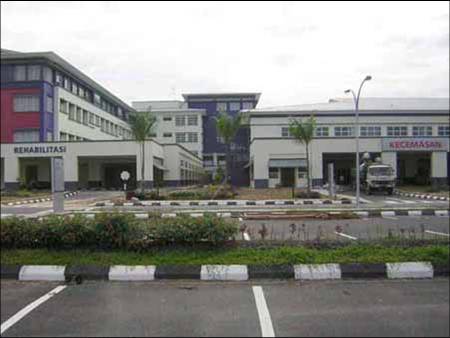
Photos: Sibu Chinese park, Malay home onstilts, suspended orchid garden, ferry in Sarekei, bamboo orchids by roadside, new Sarekei hospital, offloading latex slabs, and latex slabs in back of truck

Labels:

Add this blog to my Technorati Favorites!